






What's Happening?
Mohannad Abu Yahya, a 25-year-old Israeli civilian providing services to the IDF at military positions within the Gaza Strip, has been indicted for allegedly transporting significant quantities of drugs and cellphones into the area. According to the indictment
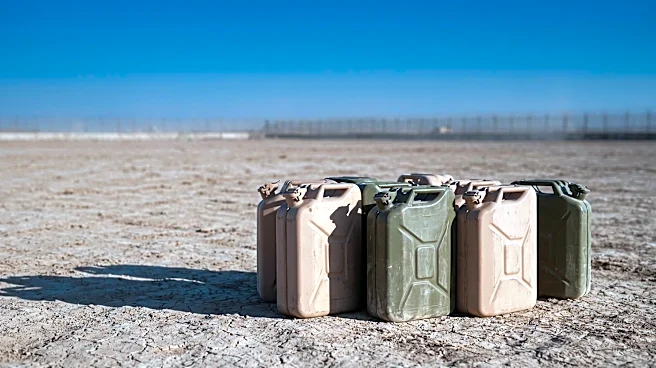
by the Southern District Prosecutor’s Office, Abu Yahya was found with approximately 40 kilograms of hashish and 11 kilograms of Captagon pills. Police investigators also seized 98 new cellphones, though these were not included in the indictment. Prosecutors allege that Abu Yahya left his authorized IDF position without permission and drove towards the Philadelphi Corridor, where he loaded jerrycans containing the concealed drugs into his vehicle. He was later spotted by soldiers behaving suspiciously and was detained after attempting to discard one of the jerrycans.
Why It's Important?
This incident highlights a critical security vulnerability within the Gaza Strip, where individuals with access to military zones can potentially exploit their positions for illicit activities. The smuggling of drugs and cellphones into Gaza can have significant implications for regional stability and security. The introduction of large quantities of drugs can exacerbate social problems and fuel criminal networks, while unauthorized cellphones can be used for communication by militant groups, potentially undermining intelligence efforts and operational security. The case also raises questions about the vetting processes for civilian contractors working in sensitive military areas and the effectiveness of existing security protocols to prevent such breaches. The prosecution's emphasis on the 'audacity' of committing drug offenses in a combat zone underscores the severity of the alleged crime and its potential impact on the security environment.
What's Next?
Mohannad Abu Yahya will remain in custody as the legal proceedings continue, with the prosecution requesting his detention until the end of the trial. The court will assess the evidence presented, including Abu Yahya's claim that he believed the jerrycans contained diesel fuel and panicked when confronted by IDF forces. The investigation may also explore the broader smuggling route, which investigators suspect involves Gaza, Egypt, and Israel, to identify any larger networks or accomplices. This case could lead to a review of security procedures for civilian personnel operating in military zones within the Gaza Strip, potentially resulting in stricter oversight and enhanced screening measures to prevent similar incidents in the future. The outcome of the trial will set a precedent for how such offenses are handled in sensitive security contexts.
Beyond the Headlines
The alleged smuggling operation points to a complex interplay of criminal enterprise and the challenging security environment in the Gaza Strip. Beyond the immediate legal consequences for Abu Yahya, the incident reveals the persistent demand for illicit goods within the territory and the methods used to circumvent security measures. The involvement of a civilian contractor with access to military areas suggests a potential insider threat, which can be particularly difficult to detect and mitigate. This case could prompt a re-evaluation of the trust placed in civilian personnel in conflict zones and the need for continuous vigilance. The presence of such a smuggling route also highlights the economic pressures and opportunities that can drive individuals to engage in illegal activities, further complicating efforts to maintain order and security in the region.