
What's Happening?
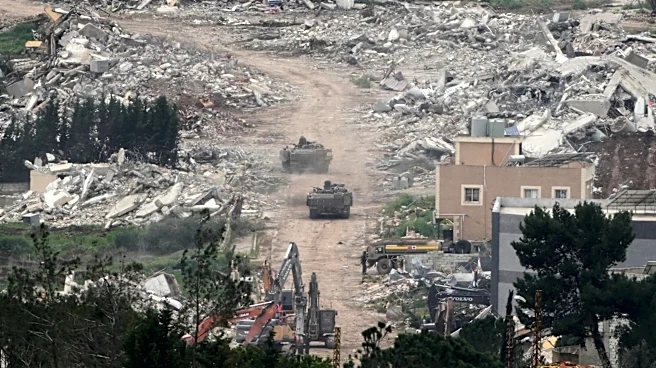
Israeli military strikes in southern Lebanon have killed at least five people, including journalist Amal Khalil, amid a fragile ceasefire. The attacks targeted a vehicle and a building in the village of
at-Tiri, where Khalil and another journalist, Zeinab Faraj, were covering the aftermath of an earlier strike. Faraj was injured and hospitalized, while Khalil was found dead under rubble. Lebanon's Ministry of Health accused Israel of targeting the journalists and obstructing rescue efforts. The Israeli military denied targeting journalists and preventing rescue operations. The incident has heightened tensions and drawn condemnation from Lebanon's Information Minister, who called for the protection of media personnel.
Why It's Important?
The death of Amal Khalil highlights the dangers faced by journalists in conflict zones and raises concerns about press freedom and humanitarian law. The incident could exacerbate tensions between Israel and Lebanon, complicating efforts to maintain the ceasefire. Lebanon's government has condemned the attack and may seek international support to hold Israel accountable. The situation underscores the challenges of ensuring civilian safety and upholding international humanitarian law in conflict zones. The international community, including media and human rights organizations, may increase scrutiny on Israel's military conduct.
What's Next?
Lebanon is expected to address the issue of Israeli military actions during upcoming ceasefire talks in Washington, seeking an extension of the truce. The talks, mediated by the United States, aim to establish a framework for lasting peace. Lebanon's government may pursue legal action against Israel through international bodies, seeking accountability for the attack on journalists. The outcome of the talks could influence regional stability and the future of Lebanon-Israel relations. Meanwhile, both sides continue to accuse each other of ceasefire violations, with the potential for further escalation.