



What's Happening?
The International Monetary Fund (IMF) has revised its global growth forecast for 2026 down to 3%, a slight decrease from the previously projected 3.1%. This adjustment is primarily due to the ongoing conflict in the Middle East and associated energy disruptions.
Despite these challenges, the demand for artificial intelligence (AI) and technology has provided some offsetting benefits, particularly for economies heavily involved in the tech sector. The IMF also raised its global inflation forecast for 2026 to 4.7%, driven by a 25% increase in energy prices. The report suggests that while the global economy has not yet entered a recession, its resilience is contingent on energy stability and the productive integration of AI investments.
Why It's Important?
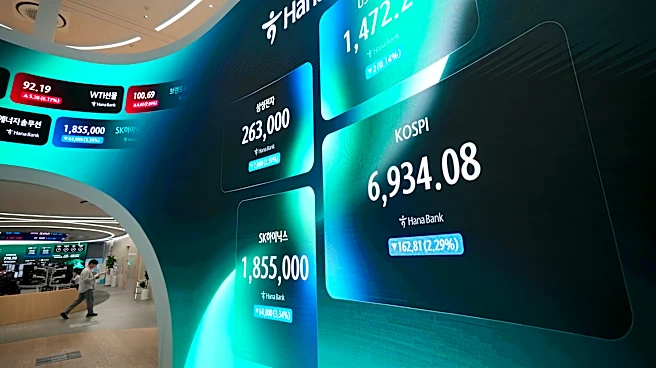
The IMF's revised forecast highlights the significant impact of geopolitical tensions and energy market volatility on global economic stability. The increased inflation forecast underscores the potential for higher consumer prices, which could affect purchasing power and economic growth. The reliance on AI and technology as growth drivers suggests a shift in economic dynamics, with countries like South Korea and China potentially benefiting from increased tech demand. However, the report warns of market adjustments if AI expectations are overly optimistic. The U.S. economy is projected to grow by 2.3%, indicating moderate resilience amid global uncertainties.
What's Next?
The IMF's forecast suggests a cautious outlook for the global economy, with potential recovery to 3.4% growth in 2027. The baseline scenario assumes stabilization in the Middle East and energy markets, but any escalation could disrupt these projections. Economies heavily reliant on energy imports may face challenges, while those investing in AI and technology could see growth opportunities. Policymakers and businesses will need to navigate these uncertainties, balancing short-term disruptions with long-term strategic investments in technology and energy resilience.