



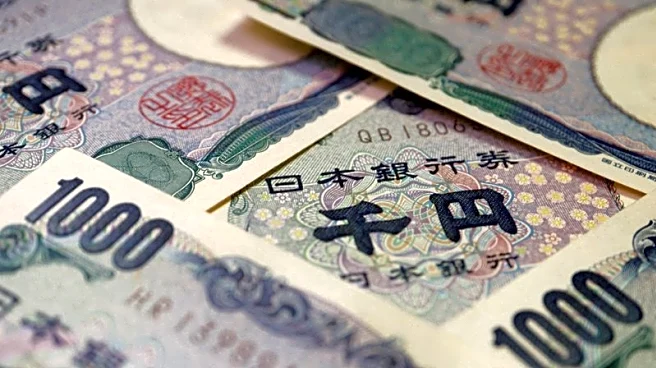
What's Happening?
Japan's top currency diplomat, Atsushi Mimura, announced that the government is prepared to take 'appropriate' action against excessive movements in the yen's exchange rate. This statement comes after a recent central bank meeting that led to a decline
in the yen's value. The Bank of Japan (BOJ) raised interest rates to 0.75% from 0.5%, marking the highest borrowing costs in three decades. Despite this, the yen weakened, with the dollar reaching 157.67 yen, its strongest level in four weeks. Finance Minister Satsuki Katayama also expressed concerns about speculative moves in the yen, which could increase import prices and the cost of living for households.
Why It's Important?
The yen's decline has significant implications for Japan's economy, particularly in terms of import costs and inflation. A weaker yen makes imports more expensive, which can lead to higher prices for goods and services, affecting household budgets. This situation is particularly concerning given the global economic context, where inflationary pressures are already high. The potential for government intervention in the currency market could stabilize the yen, but it also highlights the challenges Japan faces in balancing economic growth with currency stability. The situation is closely watched by international investors and could influence global financial markets.
What's Next?
The Japanese government may intervene in the currency market if the yen's decline continues. Such intervention could involve direct buying of yen to support its value. The BOJ's future monetary policy decisions will also be crucial, as any changes in interest rates could impact the yen's exchange rate. Market participants will be looking for signals from the BOJ and the government regarding their next steps. Additionally, the global economic environment, including U.S. Federal Reserve policies, will play a role in determining the yen's trajectory.