




What's Happening?
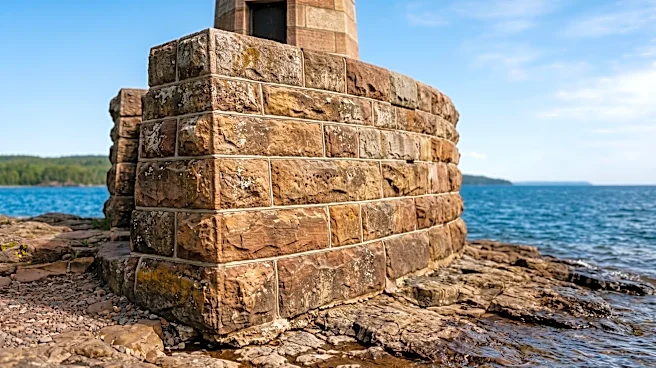
The Grand Island East Channel Lighthouse, a historic landmark near Munising, Michigan, has undergone a three-week preservation effort focused on stabilizing its sandstone foundation. This project was coordinated by the Hiawatha National Forest in partnership
with HistoriCorps, a nonprofit organization dedicated to historic preservation, and involved volunteers from across the country. Built in 1868, the lighthouse's foundation had deteriorated due to unsuitable Portland cement mortar and repeated freeze-thaw cycles in the region. The harder Portland cement contributed to cracking and surface deterioration in the softer sandstone. Volunteers meticulously removed the unsuitable mortar from between the sandstone blocks. This stabilization work is part of a larger preservation initiative, with the next phase planned for the following year, focusing on repairs to the lighthouse's roof, soffits, and fascia. The U.S. Forest Service acquired Grand Island in 1990, designating it a National Recreation Area, and has since undertaken various stabilization efforts for its historic structures.
Why It's Important?
This preservation effort is crucial for maintaining a significant piece of U.S. maritime history and cultural heritage. The Grand Island East Channel Lighthouse, having stood for over 150 years, represents a tangible link to the Great Lakes' shipping past and the architectural practices of the 19th century. The use of unsuitable materials in past repairs highlights the importance of historically appropriate conservation techniques, as modern materials can inadvertently accelerate deterioration in older structures. The involvement of volunteers and a nonprofit organization underscores the growing public interest and commitment to preserving national landmarks. Furthermore, the funding for this project, secured through the Great American Outdoors Act, demonstrates a federal commitment to protecting and maintaining national recreation areas and their historical assets, ensuring these sites remain accessible and intact for future generations to appreciate and learn from.
What's Next?
Following the successful foundation stabilization, the next phase of the preservation project for the Grand Island East Channel Lighthouse is scheduled for the upcoming year. This subsequent stage will concentrate on repairing the lighthouse's roof, soffits, and fascia. These repairs are essential to protect the structure from further weather-related damage and to ensure its long-term integrity. The ongoing efforts aim to comprehensively restore the lighthouse, addressing all critical areas of deterioration. The continued collaboration between the U.S. Forest Service, HistoriCorps, and volunteers will likely be vital for the successful completion of these future phases. The ultimate goal is to ensure the lighthouse remains a recognizable and well-preserved landmark on Lake Superior for many years to come, continuing its role as a historical and cultural beacon.
Beyond the Headlines
The preservation of the Grand Island East Channel Lighthouse extends beyond mere structural repair; it embodies a broader commitment to safeguarding national identity and collective memory. Lighthouses, in particular, symbolize guidance, resilience, and the human endeavor to navigate challenging environments. Their restoration often sparks community engagement and fosters a sense of shared ownership in historical assets. This project also highlights the intricate balance between natural forces and human-made structures, demonstrating how environmental factors like freeze-thaw cycles can impact historical integrity. The choice of appropriate materials and methods in conservation is not just a technical detail but an ethical consideration, ensuring that interventions respect the original craftsmanship and longevity of the structure. Such efforts contribute to a deeper understanding of historical engineering and the evolving practices of heritage conservation in the U.S.