







What's Happening?
North Dakota's congressional delegation, including Congresswoman Julie Fedorchak and Senators John Hoeven and Kevin Cramer, announced that the state will receive an additional $206 million for the second year of the Rural Health Transformation Program
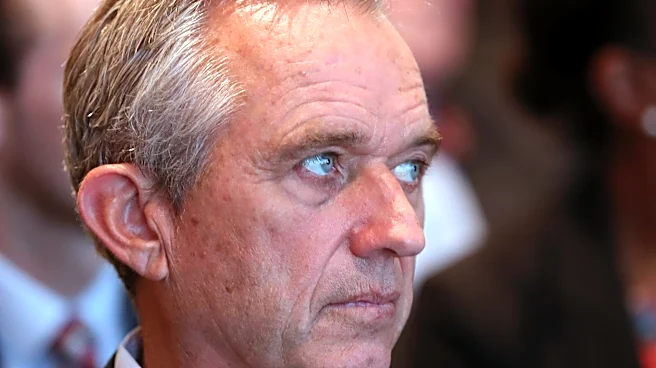
(RHTP). This funding builds on the nearly $200 million received in the program's first year, keeping North Dakota on track to potentially receive up to $1 billion over five years. The RHTP aims to transform healthcare delivery across the state, particularly in rural areas, by building a comprehensive continuum of care. The announcement followed a roundtable discussion with U.S. Health and Human Services (HHS) Secretary Robert F. Kennedy, Jr., focusing on fostering effective partnerships between HHS, the North Dakota Department of Health and Human Services (NDHHS), and local healthcare providers. Congresswoman Fedorchak emphasized the 'one-time' nature of this funding and urged state leaders to utilize these resources to fundamentally rethink and retool healthcare delivery to maximize access, quality, and sustainability.
Why It's Important?
This significant federal investment of $206 million is crucial for North Dakota's rural communities, which often face challenges in accessing quality healthcare services. The funding, part of a larger program that could total up to $1 billion, provides a unique opportunity to modernize and expand healthcare infrastructure and services. By focusing on a 'continuum of care,' the program aims to ensure that residents, especially in remote areas, have better access to medical facilities, specialized treatments, and preventative care. The emphasis on sustainability and maximizing access and quality at a reasonable cost could serve as a model for other states grappling with similar rural healthcare disparities. This initiative could lead to improved health outcomes, reduced healthcare costs in the long run, and a more robust healthcare workforce in North Dakota.
What's Next?
The North Dakota Department of Health and Human Services has already committed the first year's funding, with the majority allocated to the North Dakota Center for Rural Health to manage sub-grants. The state has also initiated programs to upgrade clinical equipment, improve healthcare worker retention, and support mobile mammography services. With the new $206 million award, state leaders are urged to 'think big' and strategically deploy these resources to further transform healthcare delivery. The ongoing collaboration between the congressional delegation, HHS, NDHHS, and healthcare providers will be critical in ensuring the program's effectiveness. Future steps will likely involve continued investment in statewide fiber optic infrastructure, the development of new critical access hospitals, and the expanded use of telehealth to recruit and retain healthcare professionals, ultimately building a more resilient and accessible healthcare system across North Dakota.
Beyond the Headlines
The Rural Health Transformation Program in North Dakota highlights a broader national challenge: ensuring equitable access to healthcare in underserved rural areas. This initiative goes beyond simply providing funds; it encourages a fundamental re-evaluation of healthcare delivery models. The focus on fiber optic infrastructure and telehealth underscores the increasing role of technology in bridging geographical gaps in healthcare access. Furthermore, the program's emphasis on workforce retention and the development of critical access hospitals addresses the systemic issues of healthcare professional shortages and facility limitations in rural settings. The success of North Dakota's approach could influence federal policy and funding strategies for rural healthcare nationwide, potentially leading to more integrated, technologically advanced, and sustainable healthcare systems in similar regions across the U.S.