





What's Happening?
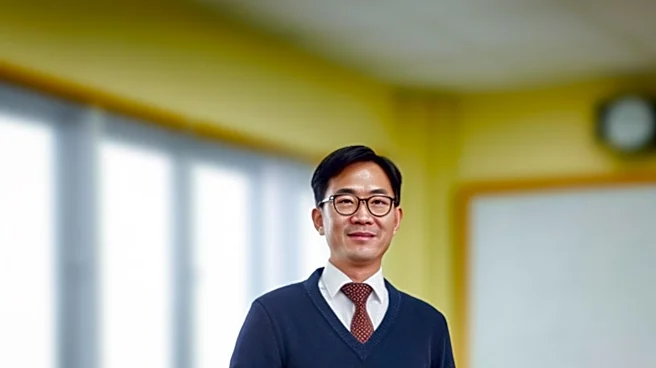
As artificial intelligence (AI) and virtual reality (VR) increasingly integrate into American classrooms, educators and parents are grappling with the challenge of teaching students to use these powerful technologies responsibly. Adam Mangana, CEO of Optima,
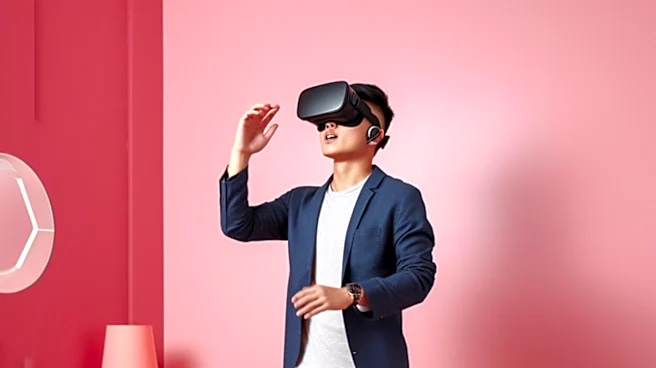
which operates the world's first virtual reality school, argues against banning these technologies. Instead, he advocates for establishing proper guardrails to ensure students use them effectively and avoid 'passive consumption.' Mangana suggests that AI can act as a personalized tutor or Socratic guide, challenging students to develop their own answers, rather than simply doing their homework for them. He also highlights VR's potential to create immersive learning experiences, such as virtually visiting historical sites, to increase student engagement while maintaining academic structure.
Why It's Important?
The integration of AI and VR into education is a pivotal development that could revolutionize learning, but it also presents significant challenges. The concern about students relying on AI to 'do the thinking for them' is critical, as it could hinder the development of essential critical thinking and problem-solving skills. Establishing 'guardrails' is vital to ensure that these technologies serve as tools to enhance learning, not replace it. If managed effectively, AI and VR could offer personalized education, making world-class learning accessible to more students regardless of their location or learning style. However, without proper oversight, these technologies could exacerbate issues like screen time addiction and create new forms of educational inequality, where access to quality AI/VR tools is unevenly distributed.
What's Next?
The ongoing discussion will likely focus on developing best practices and policies for integrating AI and VR into educational curricula. Schools will need to prioritize transparency and intentionality, clearly explaining the educational purpose of these technologies to parents and students. Educators will need training to effectively leverage AI as a 'sparring partner' for students, emphasizing the process of learning over just outcomes. Furthermore, there will be a push for the development of ethical guidelines and regulatory frameworks to ensure equitable access and prevent misuse. The evolution of these technologies will necessitate continuous adaptation in teaching methodologies and educational infrastructure to maximize their benefits while mitigating potential risks.
Beyond the Headlines
The debate over AI and VR in classrooms touches on deeper philosophical questions about the nature of learning, human cognition, and the role of technology in shaping future generations. It challenges traditional pedagogical approaches and forces a re-evaluation of what constitutes 'education' in an increasingly digital world. The potential for AI to personalize learning raises ethical questions about data privacy and algorithmic bias in educational content. Moreover, the immersive nature of VR could blur the lines between reality and simulation, impacting students' perceptions and social development. This technological shift in education is not just about tools but about fundamentally redefining how knowledge is acquired, processed, and applied, with long-term implications for societal intelligence and human-computer interaction.