









What's Happening?
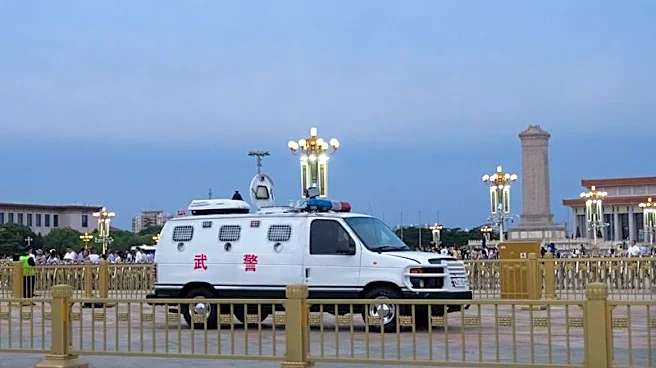
Efforts to preserve the memory of the Tiananmen Square massacre, which occurred on June 4, 1989, are intensifying, particularly outside of China. The massacre, where hundreds or possibly thousands of unarmed protesters were killed by the Chinese army,
remains a sensitive topic in China, with the government actively suppressing its memory. The China Unofficial Archives (CUA), a US-registered non-profit, is one of the organizations working to protect censored Chinese history. The CUA hosts a range of materials, including photographs and diaries, that document the events of the massacre. These efforts are crucial as censorship within China has increased under the leadership of Xi Jinping, making it difficult for the memory of the massacre to be preserved within the country.
Why It's Important?
The preservation of the Tiananmen Square massacre memory is significant as it challenges the Chinese government's narrative and censorship efforts. By maintaining these records, organizations like CUA provide a resource for independent thought and historical accuracy, countering the state-sponsored amnesia. This has broader implications for international relations and human rights advocacy, as it highlights the ongoing struggle for freedom of expression and historical truth in China. The preservation efforts also serve as a reminder of the importance of democratic values and the need to protect them against authoritarian regimes.
What's Next?
The continued efforts to preserve the memory of the Tiananmen Square massacre are likely to face challenges, including potential legal and cyber threats from the Chinese government. Organizations like CUA may need to enhance their security measures to protect their archives and staff from harassment. Additionally, there may be increased international attention and support for these preservation efforts, as they align with broader human rights and freedom of expression campaigns. The outcome of these efforts could influence how future generations understand and engage with Chinese history and politics.
Beyond the Headlines
The preservation of the Tiananmen Square massacre memory has deeper implications for the global understanding of China's political landscape. It highlights the tension between state control and individual freedoms, and the role of technology in both suppressing and disseminating information. The efforts to document and share these historical events also underscore the importance of international collaboration in protecting human rights and historical truth. As the world becomes more interconnected, the ability to access and share information across borders becomes increasingly vital in challenging authoritarian narratives.