




What's Happening?
The issue of global water scarcity is primarily driven by the limited accessibility of freshwater resources. According to recent reports, over 65% of Earth's fresh water is trapped in ice sheets, making only about 1% readily available for human use. This
situation is exacerbated by the fact that a significant portion of the remaining fresh water is located in deep groundwater reserves, which are costly and difficult to access. The Antarctic Ice Sheet alone holds approximately 70% of the world's fresh water, yet it remains largely inaccessible due to its remote location and the technical challenges associated with extraction. This disparity between the existence of fresh water and its accessibility underscores the ongoing challenges in managing global water resources effectively.
Why It's Important?
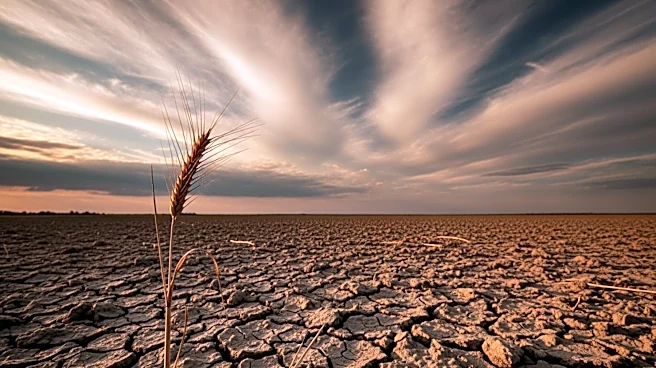
The limited accessibility of fresh water has significant implications for global water security. As the demand for water continues to rise due to population growth and industrial activities, the pressure on the available water resources intensifies. In regions like the U.S. Plains, severe drought conditions threaten agricultural productivity and water supply for communities. Moreover, the increasing energy demands of technologies such as artificial intelligence could further strain water resources, as these technologies require substantial water for cooling and operation. The situation calls for urgent attention to water management strategies that prioritize sustainable use and equitable distribution of water resources to prevent potential conflicts and ensure long-term water security.
What's Next?
Addressing global water scarcity will require coordinated efforts at both national and international levels. Policymakers and stakeholders must focus on developing innovative solutions to enhance water accessibility and efficiency. This includes investing in technologies for water conservation, improving infrastructure for water distribution, and promoting policies that encourage sustainable water use. Additionally, international cooperation is essential to address transboundary water issues and to share best practices in water management. As climate change continues to impact water availability, adaptive strategies will be crucial in mitigating the effects of water scarcity on vulnerable populations and ecosystems.
Beyond the Headlines
The challenges of water scarcity extend beyond immediate supply issues, touching on ethical and legal dimensions. Ensuring equitable access to water is a fundamental human right, and disparities in water availability can exacerbate social inequalities. Legal frameworks governing water rights and usage must be strengthened to protect vulnerable communities and ecosystems. Furthermore, cultural attitudes towards water use and conservation need to shift towards more sustainable practices. Long-term, the global community must recognize the interconnectedness of water security with other critical issues such as food security, energy production, and climate resilience.