






What's Happening?
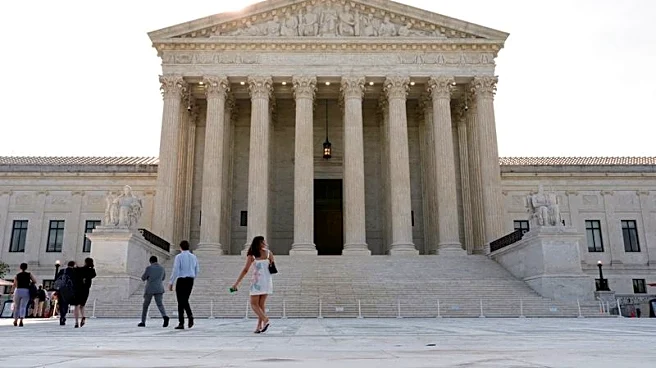
The Supreme Court has ruled in favor of President Trump in the case of Trump v. Slaughter, allowing the president to fire heads of independent agencies without cause. This decision overturns the Federal Trade Commission Act and the precedent set by Humphrey's
Executor, which had protected agency heads from arbitrary dismissal. The ruling grants the president significant control over agencies created by Congress, enabling him to replace agency leaders with political loyalists. The decision has sparked concerns about the erosion of congressional authority and the potential for increased politicization of federal agencies.
Why It's Important?
The ruling represents a major shift in the balance of power between the executive and legislative branches, diminishing Congress's ability to oversee and regulate federal agencies. By allowing the president to remove agency heads at will, the decision could lead to increased political interference in regulatory processes, undermining the independence and effectiveness of these agencies. This expansion of presidential power may also result in the erosion of institutional knowledge and expertise within federal agencies, as political loyalty takes precedence over competence and experience.
What's Next?
The decision is likely to prompt legislative efforts to redefine the roles and protections of federal agencies, as lawmakers seek to address concerns about the concentration of power in the executive branch. The ruling may also lead to increased scrutiny of the president's appointments to federal agencies, as well as efforts to ensure accountability and transparency in the regulatory process. As the implications of the decision unfold, there may be calls for reforms to safeguard the independence and integrity of federal agencies.