





What's Happening?
Naval Group has introduced a new era in mine warfare through the deployment of autonomous drone systems, fundamentally changing how naval threats are detected, identified, and neutralized. This paradigm shift, already implemented in the Belgian-Dutch
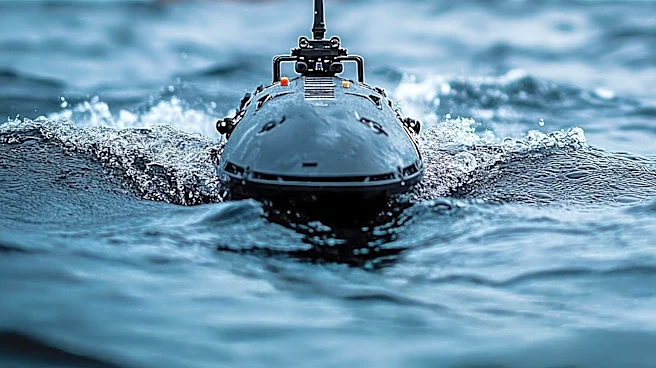
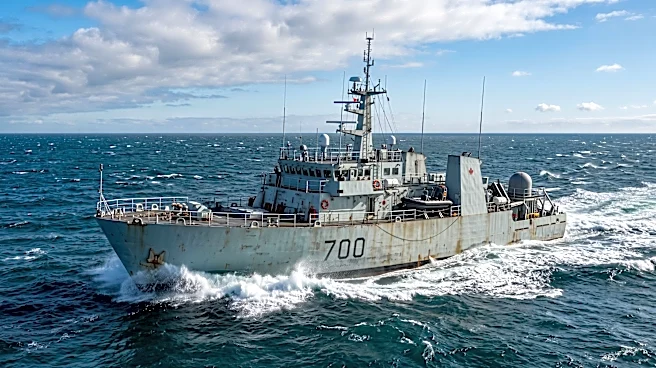
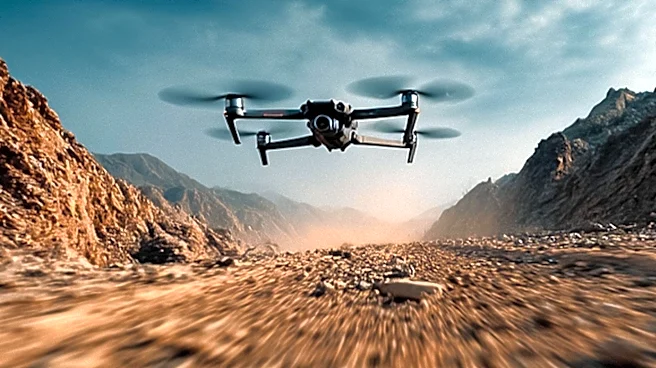
Replacement Mine Countermeasures (rMCM) program, allows mine warfare vessels to operate at a safe distance from minefields. These vessels deploy aerial or surface drones, which in turn can deploy underwater drones equipped with high-resolution sonar for detecting, localizing, and classifying mines. This remote operation significantly improves crew safety, accelerates mine clearance operations, and enables simultaneous execution of tasks that previously had to be performed sequentially. The system utilizes an open-architecture toolbox comprising various drones, payloads, software, and mission systems, making it adaptable to the needs of different navies.
Why It's Important?
This advancement is crucial for U.S. naval operations and its allies, as it addresses the inherent dangers of traditional mine warfare, where minesweepers and their crews are exposed to significant risks. By enabling stand-off operations, the new drone-based approach enhances the protection of personnel and reduces potential casualties. The increased efficiency and speed of mine clearance can significantly impact maritime security, allowing for faster and safer navigation in strategic waterways. For the U.S. Navy, integrating such advanced autonomous systems could lead to a more resilient and effective mine countermeasure capability, safeguarding naval assets and ensuring freedom of navigation in contested maritime areas. The open architecture also allows for future integration of diverse industrial partners and technologies, fostering innovation and interoperability among allied forces.
What's Next?
The successful implementation in the Belgian-Dutch rMCM program suggests a potential for broader adoption of these autonomous mine warfare systems by other navies, including the U.S. Navy. Future developments will likely focus on further enhancing the autonomy and capabilities of these drones, integrating more sophisticated sensors, and improving their resilience against electronic warfare and other threats in contested environments. The continued evolution of this technology could lead to fully autonomous mine countermeasure fleets, reducing the need for human intervention in dangerous zones. Additionally, the open architecture approach could foster international collaboration in developing and deploying these systems, leading to standardized protocols and shared technological advancements among allied nations.
Beyond the Headlines
The shift towards autonomous systems in mine warfare raises broader questions about the future of naval combat and the role of human operators. While these systems offer undeniable safety and efficiency benefits, their increasing autonomy could lead to ethical and legal considerations regarding decision-making in combat scenarios. The reliance on advanced technology also highlights the importance of cybersecurity in military operations, as these drone systems could be vulnerable to cyberattacks or jamming. Furthermore, the economic implications are significant, as the development and deployment of such sophisticated systems require substantial investment, potentially reshaping defense budgets and procurement strategies. This technological leap could also influence geopolitical dynamics by altering the balance of power in maritime domains.