
What's Happening?
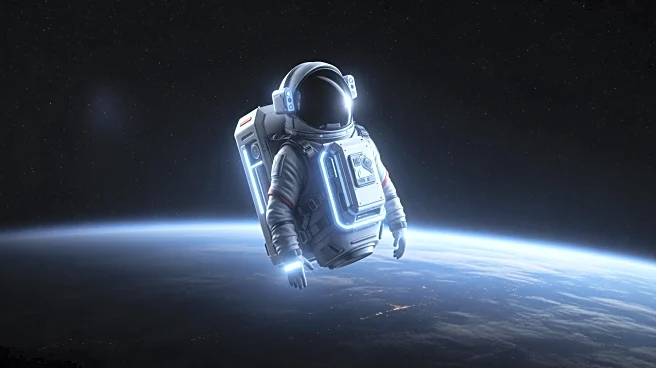
On February 7, 1984, astronaut Bruce McCandless II made history by performing the first untethered spacewalk from the Space Shuttle Challenger. Equipped with the Manned Maneuvering Unit (MMU), a nitrogen-propelled backpack, McCandless was able to move
freely in space, reaching a distance of up to 320 feet from the shuttle. This extravehicular activity (EVA) lasted for 1 hour and 22 minutes, during which McCandless tested the MMU's capabilities, a pair of bifocals for vision management, and the Manipulator Foot Restraint workstation platform. This mission marked a significant milestone in space exploration, showcasing the potential for astronauts to conduct operations outside spacecraft without the need for tethers.
Why It's Important?
The successful execution of the first untethered spacewalk by Bruce McCandless II represents a pivotal advancement in space exploration technology. The Manned Maneuvering Unit (MMU) demonstrated the feasibility of astronauts performing complex tasks in space without the constraints of tethers, potentially expanding the scope of future missions. This capability is crucial for the maintenance and repair of satellites, construction of space stations, and other operations that require mobility in space. The development and testing of such technologies are essential for the continued exploration and utilization of space, impacting both scientific research and commercial endeavors.
What's Next?
Following the success of this untethered spacewalk, NASA and other space agencies are likely to further develop and refine technologies that enhance astronaut mobility and safety during extravehicular activities. Future missions may incorporate similar or advanced versions of the MMU to facilitate more complex tasks in space. Additionally, the lessons learned from this mission could inform the design and execution of upcoming projects, such as the construction of lunar bases or Mars exploration missions, where untethered mobility could be a critical component.
Beyond the Headlines
The untethered spacewalk conducted by Bruce McCandless II not only highlights technological advancements but also raises questions about the future of human space exploration. As space agencies push the boundaries of what is possible, ethical considerations regarding the safety and well-being of astronauts become increasingly important. The development of reliable and safe technologies is paramount to ensuring that the risks associated with space exploration are minimized. Furthermore, this achievement underscores the collaborative efforts required in the field of space exploration, involving scientists, engineers, and policymakers working together to overcome challenges and achieve new milestones.