





What's Happening?
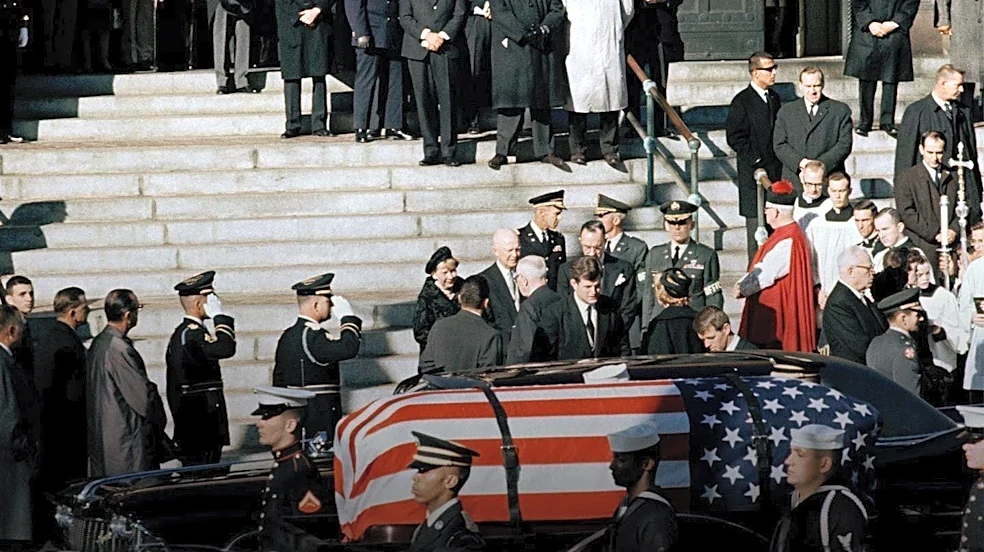
The assassination of President John F. Kennedy on November 22, 1963, in Dallas, Texas, remains a subject of intense scrutiny and debate, with various pieces of evidence and investigations leading to differing conclusions. The Warren Commission, established
shortly after the assassination, concluded that Lee Harvey Oswald acted alone in killing President Kennedy. However, a later congressional investigation, the House Select Committee on Assassinations (HSCA) in 1979, while agreeing that Oswald fired the fatal shots, suggested that President Kennedy was 'probably assassinated as the result of a conspiracy.' This conclusion was heavily influenced by acoustic analysis, which was subsequently challenged by independent scientists. Key areas of contention include the 'single-bullet theory,' which posits one bullet passed through President Kennedy and then Texas Governor John Connally, and the authenticity and interpretation of medical evidence, including autopsy photographs. The release of previously classified documents, mandated by the JFK Records Act of 1992, has provided additional material for public and historical review, though many records remained restricted for decades, fueling distrust and speculation.
Why It's Important?
The ongoing debate surrounding President Kennedy's assassination has profound implications for public trust in government institutions and historical narratives. The discrepancies between the Warren Commission's findings and the HSCA's conclusions, coupled with the long-term classification of related documents, have fostered an environment of skepticism regarding official accounts. This persistent questioning affects how the public perceives the transparency and accountability of federal agencies like the FBI and CIA. The case also serves as a critical example in forensic science and historical methodology, highlighting the challenges of reconstructing complex events, interpreting evidence, and managing witness testimonies. For U.S. society, the unresolved questions contribute to a broader cultural narrative of conspiracy theories and a desire for definitive answers to pivotal historical moments, influencing political discourse and public engagement with historical events.
What's Next?
Future developments in the JFK assassination case will likely revolve around the continued analysis of newly released and previously redacted documents. Historians, researchers, and the public will continue to scrutinize these records for any information that could shed new light on the events of 1963, the actions of Lee Harvey Oswald, or the potential involvement of other parties. The ongoing process of declassification, though largely completed, may still yield further insights as technology allows for more detailed examination of existing materials or as new interpretations emerge from the vast archive. The focus will remain on distinguishing between documented institutional failures, such as information-sharing deficiencies between agencies, and concrete evidence of a broader conspiracy. The challenge will be to apply rigorous historical and scientific standards to new findings, avoiding premature conclusions based on fragmentary or uncorroborated information.
Beyond the Headlines
The enduring controversies surrounding President Kennedy's assassination extend beyond the immediate facts of the event, touching upon deeper themes of national memory, the nature of truth, and the role of government secrecy. The 'magic bullet' theory and the conflicting interpretations of medical and acoustic evidence have become cultural touchstones, symbolizing the public's struggle to reconcile official narratives with persistent doubts. This case has significantly shaped the landscape of American conspiracy theories, demonstrating how a lack of complete transparency can lead to decades of speculation and distrust. It also highlights the ethical dilemmas involved in managing sensitive historical records, balancing the public's right to know with privacy concerns and national security interests. The assassination's legacy underscores the importance of robust investigative processes and transparent governmental operations to maintain public confidence in the face of national tragedies.