



What's Happening?
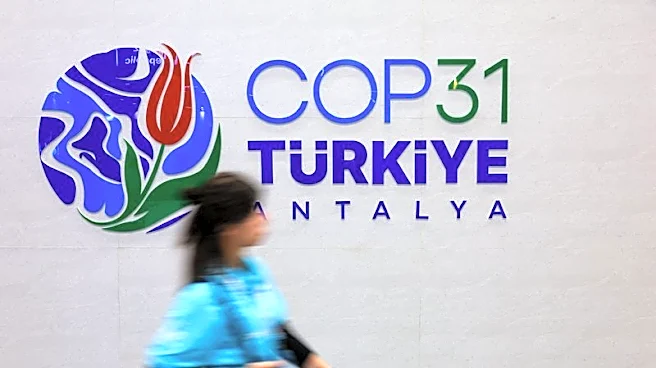
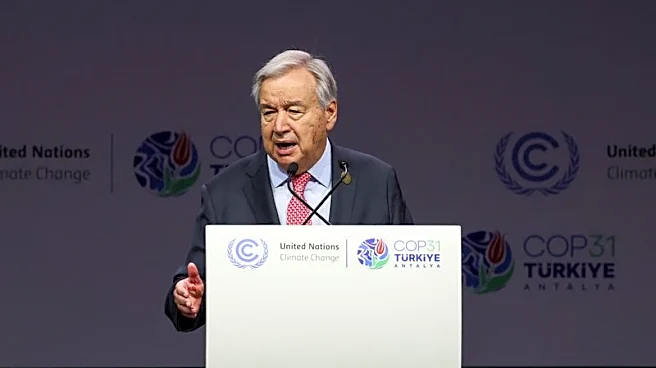
United Nations Secretary-General António Guterres has urged governments, energy producers, investors, and buyers to take stronger action against methane emissions and growing waste pollution. Speaking at the COP31 Leaders’ Roundtable on Zero Waste, Circularity,
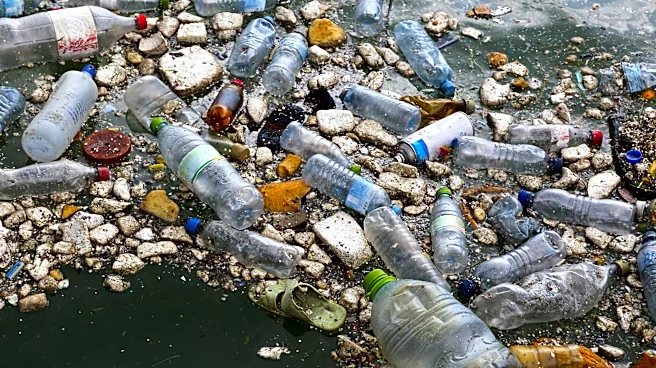
and Methane in Antalya, Türkiye, Guterres called for the development of a global near-zero methane standard for the oil and gas industry. He asked the United Nations Environment Programme (UNEP) to create a credible, science-based global benchmark based on robust measurement, reporting, and verification. Guterres emphasized that voluntary action is no longer sufficient, especially in the fossil fuel sector, which possesses the technology and resources to rapidly reduce emissions. He also highlighted the significant scale of global waste pollution, noting that over 2 billion tonnes of municipal waste are generated annually, with the equivalent of 2,000 garbage trucks full of plastic dumped into oceans, rivers, and lakes daily. Furthermore, electronic waste is growing five times faster than it is being recycled, and billions lack basic waste collection services. Guterres stressed the need for an ambitious global treaty to end plastic pollution and ensure cities receive adequate financing for waste collection, composting, and circular infrastructure.
Why It's Important?
The call for a global near-zero methane standard and an ambitious plastic pollution treaty carries significant implications for the U.S. and global environmental policy. Methane is a potent greenhouse gas, responsible for nearly one-third of current global warming, and its reduction is considered one of the fastest ways to limit the 1.5°C temperature threshold overshoot. For the U.S. energy sector, particularly oil and gas, this could necessitate substantial investments in new technologies and infrastructure to monitor, prevent, and repair methane leaks, potentially increasing operational costs but also fostering innovation in emissions reduction. The emphasis on a circular economy, which Guterres stated could generate over $100 billion annually by 2050, presents economic opportunities for U.S. businesses in waste management, recycling, and sustainable product design. Conversely, industries heavily reliant on single-use plastics or those with inefficient waste management practices could face increased regulatory pressure and financial burdens. The proposed global treaty on plastic pollution would likely impact U.S. manufacturing, consumer goods, and waste management sectors, pushing for more sustainable practices and potentially altering supply chains. The U.S. stands to gain from improved public health outcomes and job creation in green industries, but also faces the challenge of adapting its vast industrial landscape to these new global environmental standards.
What's Next?
Following Secretary-General Guterres's address, the immediate next steps involve the United Nations Environment Programme (UNEP) developing a credible, science-based global benchmark for near-zero methane emissions in the oil and gas industry. This benchmark will likely inform future international discussions and national policies. Governments, including the U.S., will be urged to strengthen efforts to reduce emissions, enforce effective regulations, and introduce incentives for responsible waste management. Oil and gas producers are expected to face increased pressure to end routine flaring and venting, repair methane leaks, and improve emissions monitoring. Buyers will be encouraged to demand verified methane reductions, and investors will be urged to integrate methane performance into their investment decisions. Concurrently, countries will be pressed to conclude an ambitious global treaty to end plastic pollution, which would involve negotiations on legally binding targets and mechanisms for implementation. This could lead to new national legislation and corporate policies in the U.S. aimed at reducing plastic production, increasing recycling rates, and improving waste infrastructure. The call for halving food waste by 2030 and making manufacturers responsible for product waste will also likely drive policy changes and industry innovation in the U.S.
Beyond the Headlines
The push for a global near-zero methane standard and a comprehensive plastic pollution treaty extends beyond immediate environmental concerns, touching upon deeper ethical, economic, and geopolitical dimensions. Ethically, Guterres's emphasis on the disproportionate impact of inadequate waste management on public health and the environment in developing nations highlights a global equity issue, urging developed nations like the U.S. to take greater responsibility. The concept of a circular economy, where products are designed for longevity and waste is minimized, represents a fundamental shift from the traditional linear 'take-make-dispose' model. This paradigm shift could redefine U.S. industrial practices, consumer behavior, and resource allocation, fostering a more sustainable economic model. Geopolitically, the development of global standards and treaties requires significant international cooperation and could influence trade relations and diplomatic efforts. The U.S.'s role in these negotiations will be crucial in shaping the global environmental agenda and demonstrating leadership in addressing climate change and pollution. Furthermore, the focus on holding manufacturers accountable for the waste generated by their products could lead to significant legal and regulatory reforms, potentially shifting the burden of waste management from municipalities to corporations and incentivizing eco-friendly product design and packaging innovations.