



What's Happening?
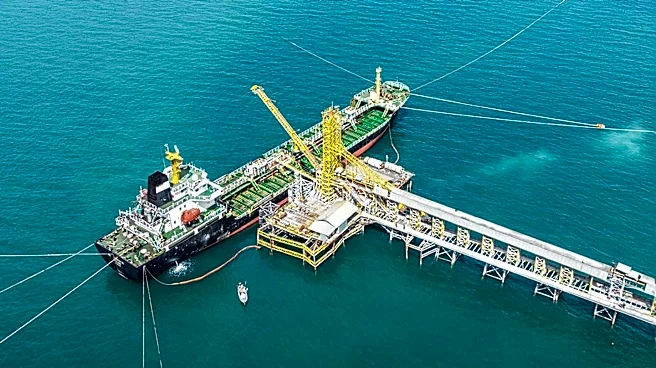
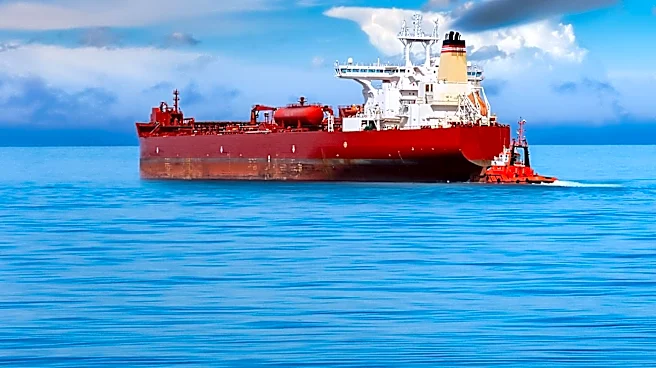
Kazakhstan has restarted crude exports through the Caspian Pipeline Consortium (CPC) after a week-long suspension due to drone attacks on the Black Sea marine terminal. The terminal, crucial for Kazakhstan's oil exports, resumed operations, allowing tankers
to load crude from the Tengizchevroil project. The suspension had forced Kazakhstan to reduce oil production to prevent storage overflow. The CPC pipeline, which transports oil from Kazakhstan's Tengiz oilfield to the Black Sea, is vital for international producers like Chevron and ExxonMobil. The disruption had temporarily removed over 1 million barrels per day of Kazakh production from the market.
Why It's Important?
The resumption of CPC oil exports is significant for global oil markets, which are already under pressure from disruptions in the Black Sea and Middle East. Kazakhstan's Tengiz oilfield is a major source of crude for international markets, and its temporary shutdown added to global supply risks. The reopening of the terminal helps stabilize Kazakhstan's oil production and export levels, which are crucial for the country's economy and for international oil companies operating in the region. The situation highlights the vulnerability of global oil supply chains to geopolitical tensions and security threats.
What's Next?
Kazakhstan's Energy Ministry has indicated that export operations will continue, subject to ongoing security assessments. The situation remains fluid, with potential for further disruptions if security threats persist. International stakeholders, including oil companies and global markets, will be closely monitoring the security situation in the Black Sea region. The incident underscores the need for enhanced security measures to protect critical energy infrastructure from geopolitical threats.