
What's Happening?
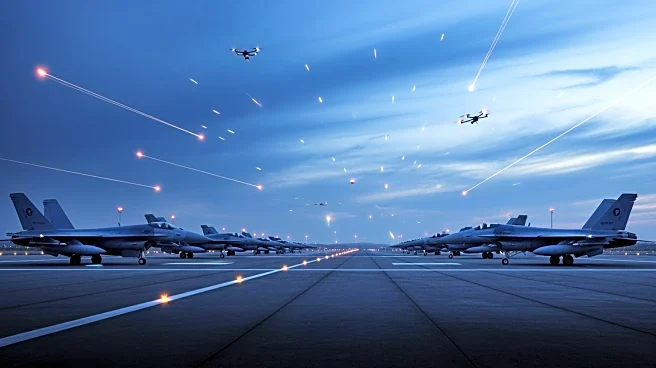
NATO fighter jets were deployed and air defense systems were put on alert in Poland in response to Russia's latest drone and missile strikes on Ukraine. The Armed Forces Operational Command in Warsaw reported
that these actions were preventive, aimed at securing airspace, especially near threatened regions. The alert lasted under four hours, with no violations of Polish airspace observed. The Spanish, Czech, German, and Dutch forces participated in the response. Ukraine's air force reported that Russia launched 653 drones and 51 missiles, with significant impacts across 29 locations. The attack was one of the largest since the invasion began, targeting residential, railway, and energy infrastructure, causing injuries and power disruptions.
Why It's Important?
The escalation of military activities by Russia in Ukraine and the subsequent NATO response highlight the ongoing tensions in Eastern Europe. This situation underscores the potential for broader regional instability, affecting international relations and security dynamics. The involvement of multiple NATO countries in the response indicates a collective defense posture, which could influence future diplomatic and military strategies. The attacks on critical infrastructure in Ukraine also pose humanitarian challenges, impacting civilian life and potentially leading to further international aid and intervention efforts.
What's Next?
The situation may lead to increased military readiness and coordination among NATO allies, as well as potential diplomatic engagements to address the conflict. Ukraine's call for additional sanctions and support for air defenses suggests ongoing international discussions on how to counteract Russian aggression. The potential for further escalations could prompt new security measures and policy decisions within NATO and the European Union.