






What's Happening?
In Missouri, an unlikely alliance has formed between labor unions and reproductive rights groups, leading to significant success in recent ballot initiatives. This coalition has announced a $1 million campaign aimed at opposing Republican lawmakers who
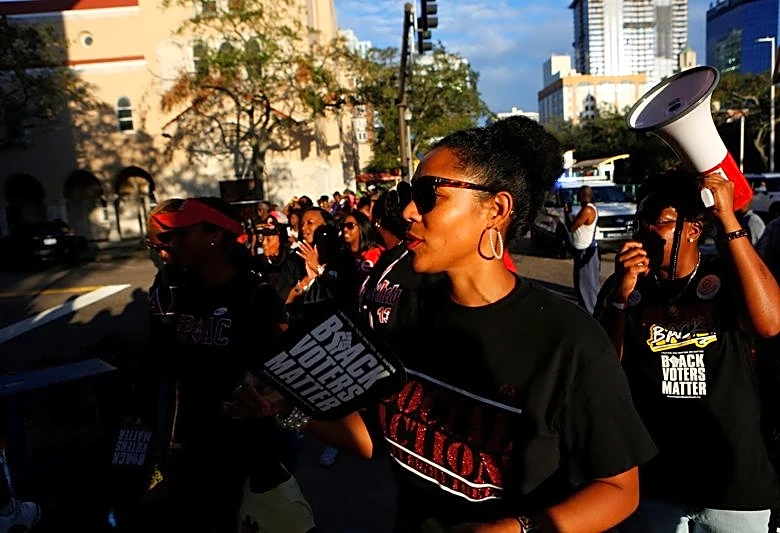
voted to repeal the state’s paid sick leave requirement. This partnership, which has evolved over years of shared battles against the Republican-controlled legislature on issues like abortion rights, worker protections, and the initiative petition process, has demonstrated its effectiveness at the ballot box. For instance, in 2018, voters repealed a right-to-work law, and in 2020, they expanded Medicaid. More recently, in 2024, they approved both abortion rights and a higher minimum wage with paid sick leave. This August, the coalition successfully worked together to defeat Amendments 4 and 5, which dealt with the initiative petition process and the elimination of the state income tax, respectively. According to Clarke Wheeler, a senior policy analyst with the National Women’s Law Center, Missouri serves as a "shining example of the power of cross-movement organizing."
Why It's Important?
This collaboration is significant because it demonstrates a strategic shift in advocacy within a politically divided state. By uniting diverse groups with common interests, the coalition has managed to overcome legislative hurdles and achieve policy changes directly through voter initiatives. This approach challenges the traditional political landscape where single-issue advocacy often struggles against well-funded opposition. The success of this alliance highlights the potential for broad-based coalitions to influence policy, even in states dominated by one political party. It also underscores the interconnectedness of economic and reproductive rights, as articulated by Nancy Cross, former vice president of SEIU Local 1, who noted that the ability to choose whether to have a child impacts a worker's economic well-being. This model of cross-movement organizing could serve as a blueprint for other states facing similar legislative challenges, empowering citizens to enact change when their elected representatives do not align with their priorities.
What's Next?
The coalition faces another critical test in November, as Missourians will vote on whether to repeal the abortion rights amendment approved in 2024 and reinstate an abortion ban. The success of the August campaigns against Amendments 4 and 5 provides the coalition with momentum, and leaders like Mallory Schwarz, executive director of Abortion Action Missouri, express hope that voters will again reject the proposed abortion ban. The ongoing efforts will involve continued public awareness campaigns, voter mobilization, and strategic communication to connect issues of healthcare and economics. The alliance will need to maintain its unity and broad appeal to navigate the complexities of the upcoming ballot measure. The outcome of the November vote will be a significant indicator of the long-term viability and influence of this cross-movement organizing strategy in Missouri and potentially beyond.
Beyond the Headlines
The formation and success of this alliance in Missouri reveal a deeper trend in U.S. politics: the increasing recognition that various social and economic issues are intertwined. The coalition's ability to bridge divides between labor and reproductive rights advocates, despite historical differences and even internal resistance from some Catholic union leaders, signifies a maturing understanding of intersectionality in grassroots organizing. This approach moves beyond siloed advocacy, recognizing that issues like paid sick leave, minimum wage, and access to reproductive healthcare all impact the overall well-being and autonomy of individuals, particularly women and working-class communities. The coalition's emphasis on shared values and community well-being over partisan politics suggests a potential path for overcoming polarization and achieving tangible results for citizens, demonstrating that collective action can transcend ideological boundaries when focused on common human needs.