








What's Happening?
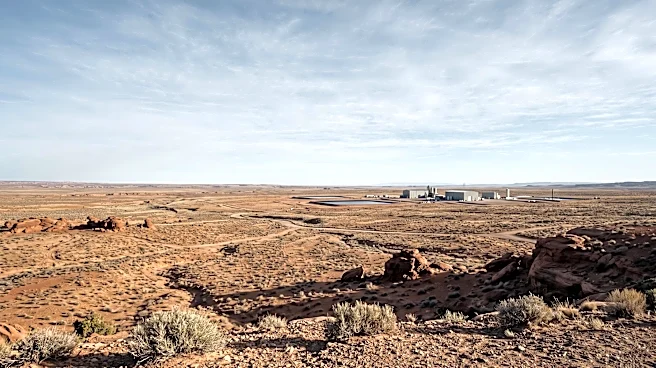
The Ute Mountain Ute Tribe and other Indigenous communities are expressing renewed concerns over the health impacts of uranium production, particularly around the White Mesa Mill in Utah, the nation's only conventional uranium mill. This heightened concern comes
as the U.S. government pushes to revive domestic uranium production, driven by a 2024 federal law banning Russian uranium imports by 2028 and President Trump's goal to quadruple U.S. nuclear energy capacity by 2050. The White Mesa Mill, owned by Energy Fuels, plans to significantly increase its yellowcake production and expand its waste storage facilities. Tribal members, including Malcolm Lehi and Yolanda Badback, fear potential contamination of their water sources and air quality, citing historical injustices and health issues linked to past uranium mining. Despite assurances from state regulators and the company that pollution is contained and current operations are safe, residents report odors and continue to rely on bottled water due to distrust.
Why It's Important?
This situation highlights a critical conflict between national energy policy goals and the environmental and health concerns of Indigenous communities. The push for domestic uranium production, while aiming to secure energy independence and support low-carbon nuclear power, directly impacts tribal lands and populations that have historically suffered from the consequences of uranium mining. The debate over the White Mesa Mill underscores broader issues of environmental justice, tribal sovereignty, and the long-term legacy of industrial activities on vulnerable communities. The federal government's fast-tracking of mining projects and the expansion plans of the mill raise questions about the adequacy of environmental reviews and the protection of Indigenous rights, potentially setting precedents for future resource extraction projects on or near tribal lands across the U.S. The health implications, particularly regarding water and air quality, could have lasting effects on the well-being and cultural heritage of these communities.
What's Next?
The Ute Mountain Ute Tribe and advocacy groups like the White Mesa Concerned Community are expected to continue their opposition to the mill's expansion and increased operations. This will likely involve further protests, legal challenges, and calls for more stringent environmental monitoring and regulation. A University of Utah health survey is currently exploring the reported rates of cancer and asthma in the White Mesa community, which could provide crucial data to support tribal claims. The EPA and state environmental agencies will face ongoing pressure to ensure compliance with environmental laws, particularly regarding radon emissions and potential water contamination. The broader national context of increasing demand for nuclear power and the ban on Russian uranium imports will likely intensify the push for domestic uranium sourcing, potentially leading to similar conflicts in other regions with uranium deposits. The outcome of these local struggles could influence future federal policies on resource extraction and tribal engagement.
Beyond the Headlines
The conflict at White Mesa extends beyond immediate environmental concerns, touching upon deep-seated issues of historical trauma and systemic injustice faced by Indigenous peoples. The legacy of uranium mining on the Colorado Plateau, which exposed many Navajo (Diné) miners to radiation without warning and left thousands of abandoned waste sites, has fostered profound distrust in government and industry assurances. This historical context means that current debates are not just about present-day pollution but also about accountability for past harms and the right to self-determination for tribal nations. The reliance on bottled water by White Mesa residents, despite official claims of safe tap water, symbolizes a broader loss of faith in institutions and a struggle for environmental sovereignty. The push for nuclear energy, while framed as a climate solution, inadvertently revives these historical tensions, forcing a re-evaluation of who bears the burden of energy production and how the U.S. reconciles its energy needs with its commitments to environmental justice and tribal rights.