
What's Happening?
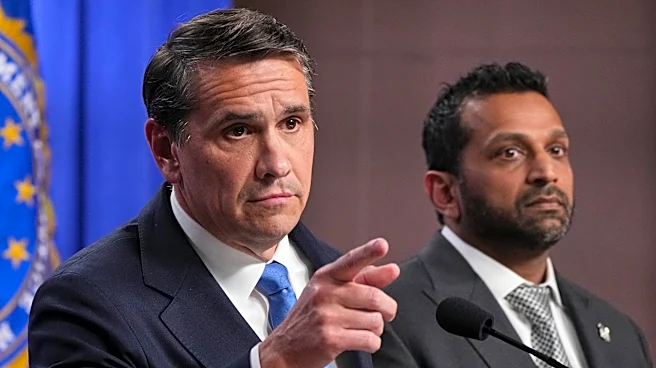
The Department of Justice, led by U.S. Attorney Jeanine Ferris Pirro and Assistant Attorney General A. Tysen Duva, has announced significant actions against Southeast Asian scam centers that have defrauded
Americans of billions of dollars. The Scam Center Strike Force has charged two Chinese nationals involved in managing a cryptocurrency investment fraud compound in Burma and attempted to open another in Cambodia. The operation also included the seizure of a Telegram channel used for recruiting human trafficking victims and the shutdown of 503 fraudulent investment websites. The Strike Force has restrained over $700 million in cryptocurrency linked to money laundering from these scams. The Department of the Treasury has imposed sanctions on Cambodian scam center operators, and the Department of State has offered rewards for information leading to the recovery of proceeds from these scams.
Why It's Important?
This coordinated effort highlights the U.S. government's commitment to combating cyber-enabled fraud and protecting American citizens from international scam operations. The actions taken by the Scam Center Strike Force aim to dismantle transnational criminal organizations that exploit vulnerable Americans through sophisticated fraud schemes. By targeting the financial networks and infrastructure of these scam centers, the U.S. seeks to disrupt their operations and prevent further financial losses. The initiative also underscores the importance of international cooperation in addressing cybercrime, as these scams often involve complex networks operating across multiple countries. The significant financial impact of these scams on American victims, including the loss of life savings, underscores the need for robust enforcement and preventive measures.
What's Next?
The Scam Center Strike Force will continue its efforts to identify and seize funds involved in money laundering related to these scams, with the goal of returning funds to victims. The Department of Justice and its partners will maintain pressure on transnational criminal organizations, leveraging diplomatic, financial, and law enforcement tools. The U.S. government is expected to enhance public awareness campaigns to educate Americans on identifying and avoiding such scams. Additionally, the Strike Force will likely expand its collaboration with private industry to strengthen defenses against cyber-enabled fraud. Ongoing investigations and potential future charges against individuals involved in these operations are anticipated as the Strike Force continues its work.
Beyond the Headlines
The actions taken by the Scam Center Strike Force reflect broader ethical and legal challenges in addressing cybercrime and human trafficking. The use of forced labor in scam operations raises significant human rights concerns, highlighting the need for comprehensive strategies to combat trafficking and exploitation. The involvement of high-level operators in these schemes points to the complexity and scale of organized crime networks. The U.S. government's response may influence international norms and policies regarding cybercrime and financial fraud, potentially leading to stronger global cooperation and regulatory frameworks. The focus on returning stolen funds to victims also emphasizes the importance of restorative justice in addressing the impact of financial crimes.