

What's Happening?
Rep. Brad Knott (R-NC) has co-sponsored the 'Right to Worship Act' alongside Rep. Tom Suozzi (D-NY), a bipartisan legislative effort aimed at safeguarding houses of worship from disruptions. The proposed bill seeks to establish a 100-foot protest-free
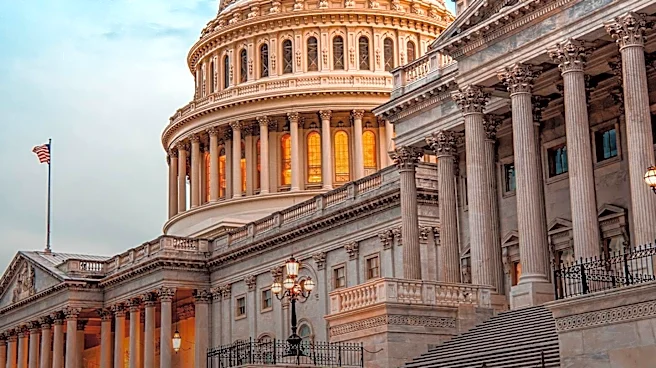
buffer zone around religious establishments during services, making it unlawful to knowingly impede or disrupt individuals attending worship. Knott emphasized that the legislation is designed to balance potentially conflicting elements of the First Amendment, specifically the rights to free speech and religious worship. He stated that the right to worship is currently under attack across the country. The bill has garnered significant support from over 30 national religious organizations, including Hindu, Sikh, and Jewish groups, who rallied at Capitol Hill to advocate for its passage. This initiative builds upon Suozzi's earlier 'Safeguarding Access to Congregations and Religious Establishments from Disruption (SACRED) Act' introduced in April, with the 'Right to Worship Act' representing a bipartisan and bicameral effort launched in August.
Why It's Important?
This bipartisan bill addresses a growing concern regarding the safety and accessibility of religious services in the United States. The establishment of a 100-foot buffer zone around houses of worship during services aims to protect congregants from harassment and disruption, thereby ensuring their ability to exercise their First Amendment right to religious freedom without fear or intimidation. The broad coalition of support from diverse religious organizations underscores the widespread perception that the freedom to worship is under threat across various faiths. For religious communities, this legislation could provide a crucial legal tool to maintain peace and order during their services, fostering an environment where individuals can practice their faith without interference. Conversely, it raises important questions about the balance between freedom of speech and freedom of religion, as it seeks to restrict protest activities in close proximity to places of worship. The bill's passage could set a precedent for how these fundamental rights are interpreted and protected in public spaces, potentially influencing future legislation concerning public assembly and religious practice.
What's Next?
The 'Right to Worship Act' will proceed through the legislative process in the U.S. House of Representatives, with lawmakers seeking its early passage. The bipartisan nature of the bill, co-sponsored by a Republican and a Democrat, along with the strong backing from numerous national religious organizations, suggests a concerted effort to move it forward. Stakeholders, including the supporting faith groups, will likely continue to lobby Congress for its approval. The bill's journey will involve committee hearings, potential amendments, and votes in both the House and potentially the Senate. If passed, it would then require presidential assent to become law. The implementation of such a law would necessitate clear guidelines for enforcement by local law enforcement agencies and could lead to legal challenges regarding its constitutionality, particularly concerning the balance between freedom of speech and religious exercise. The ongoing debate will likely focus on defining the scope of 'disruption' and ensuring that the buffer zone provisions are applied fairly and consistently.
Beyond the Headlines
The 'Right to Worship Act' delves into the complex interplay between two fundamental First Amendment rights: freedom of speech and freedom of religion. While the bill aims to protect the sanctity of religious services, it also implicitly acknowledges the potential for conflict when protest activities occur near houses of worship. This legislation could spark broader discussions about the limits of free expression when it infringes upon the ability of others to practice their faith peacefully. Ethically, it raises questions about how society balances the rights of individuals to voice dissent with the rights of religious communities to worship without intimidation. Legally, the establishment of a 100-foot buffer zone could be challenged on grounds of restricting public assembly and free speech, potentially leading to court interpretations that further define the boundaries of these constitutional protections. The bill's success or failure could influence how future legislative efforts address similar conflicts between competing rights, shaping the legal and cultural landscape of public discourse and religious practice in the U.S.