








What's Happening?
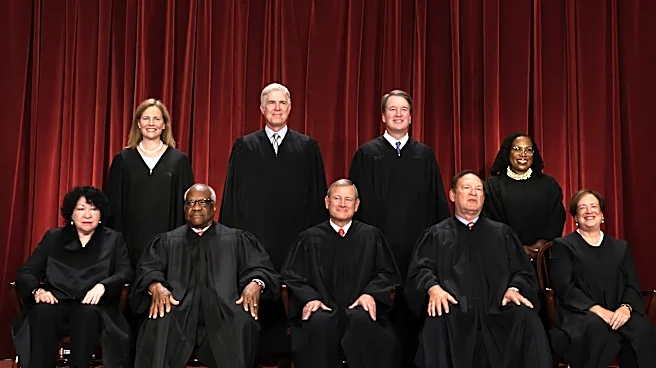
The Supreme Court's recent decisions have raised concerns about the subversion of legal precedents. In cases like Cisco and Callais v. Louisiana, the Court has been accused of using past dissents to reshape the law, effectively overturning established
precedents without formally acknowledging it. Justice Samuel Alito's majority opinion in Callais narrowed the enforcement of the Voting Rights Act, citing a need for 'vast social change.' Critics argue that this approach undermines the stability and predictability of the legal system, as the Court appears to be selectively applying precedents to align with current ideological goals.
Why It's Important?
The Supreme Court's approach to precedent is crucial for maintaining the rule of law and ensuring consistency in legal interpretations. By subtly altering precedents without formal acknowledgment, the Court risks eroding public trust and the perceived legitimacy of its decisions. This practice could lead to increased uncertainty in the legal system, as stakeholders may find it challenging to predict how laws will be applied. The potential for significant shifts in legal interpretations also raises concerns about the balance of power between the judiciary and other branches of government.