


What's Happening?
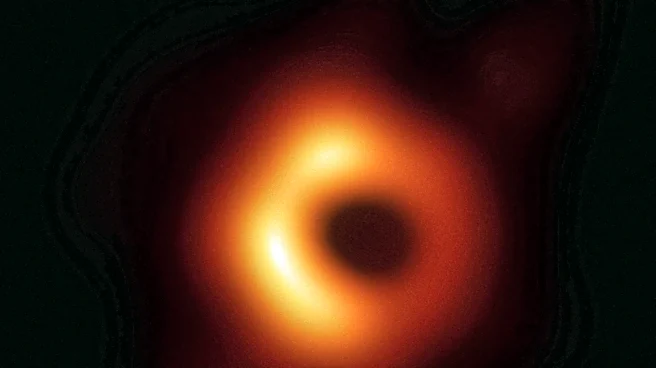
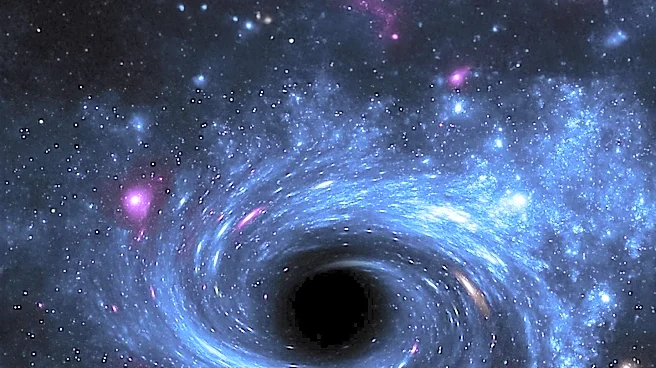
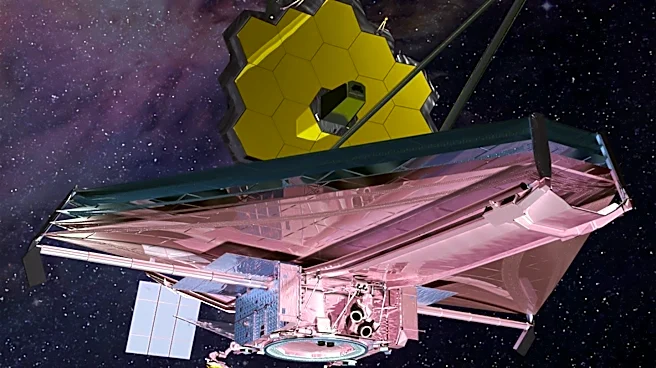
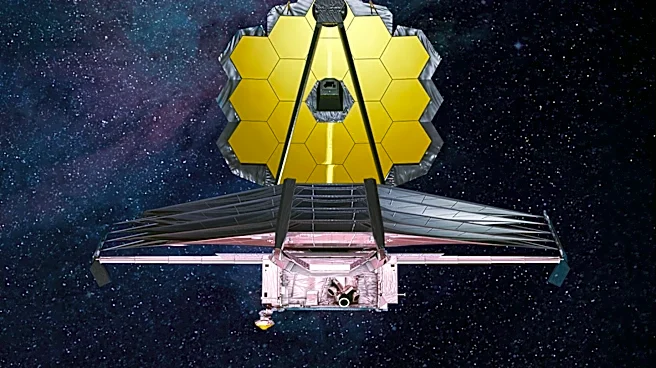
NASA's James Webb Space Telescope (JWST) is significantly enhancing astronomers' ability to study actively growing, supermassive black holes in the early universe. Its sensitive, high-resolution near- and mid-infrared instruments allow for the characterization
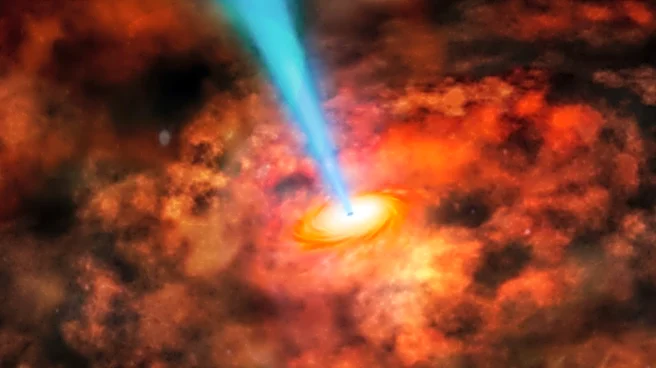
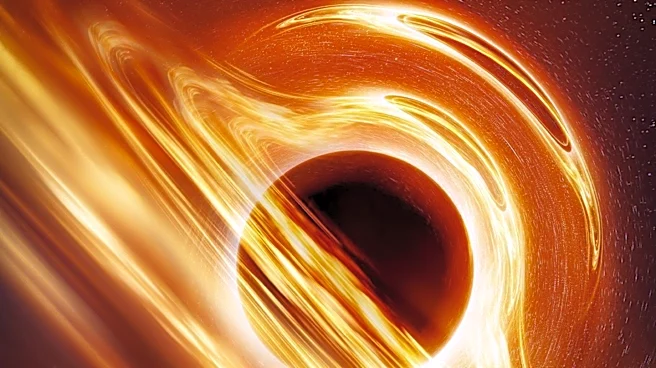
of properties previously unobservable, challenging existing theories about black hole evolution across cosmic time. A notable discovery by Webb is a class of objects dubbed 'little red dots' (LRDs), which astronomers are actively investigating. These LRDs, compact and red in appearance, are observed as early as 600 million years after the Big Bang and largely vanish by about 2 billion years afterward. While their exact nature is still debated, astronomers theorize they could be active galactic nuclei (AGN), which would imply a much higher prevalence of AGN than previously predicted. Webb's observations are also providing crucial insights into the formation of the first supermassive black holes, known as 'black hole seeds,' by allowing astronomers to study the early universe in unprecedented detail.
Why It's Important?
The JWST's contributions are critical for understanding fundamental questions about the universe's evolution, particularly the co-evolution of black holes and galaxies. Black holes, especially supermassive ones, play a pivotal role in shaping galaxies, including our own Milky Way. By observing the early universe, Webb helps fill in missing pieces of this cosmic puzzle, revealing how these massive objects formed and influenced their host galaxies. The discovery and study of 'little red dots' could revolutionize our understanding of early universe astrophysics, potentially indicating a different distribution or type of active black holes than previously thought. This research not only deepens our scientific knowledge but also refines the models used to predict the universe's future, impacting fields from theoretical physics to cosmology. The ability to measure black hole masses indirectly through spectroscopy and stellar orbits, as enabled by Webb, provides powerful tools for future astronomical research.
What's Next?
Astronomers will continue to use the JWST to investigate the nature of 'little red dots' and their connection to active galactic nuclei, aiming to resolve whether they are indeed AGN or other exotic types of celestial objects. Further observations of the early universe with Webb will focus on gathering more evidence for 'black hole seeds,' distinguishing between 'light seeds' (formed from massive stars) and 'heavy seeds' (formed from direct collapse or runaway stellar collisions). The cooperation between Webb and other observatories, such as NASA's Nancy Grace Roman Space Telescope, will be crucial. Roman will survey vast areas of the sky to identify thousands of supermassive black holes in the early universe, providing numerous targets for Webb's detailed spectroscopic analysis. This collaborative approach is expected to lead to a more robust understanding of black hole evolution and their impact on galaxy formation throughout cosmic time.
Beyond the Headlines
The JWST's discoveries extend beyond mere data collection; they are sparking profound discussions within the astronomy community about the initial conditions of the universe and the fundamental processes that govern its development. The debate surrounding 'little red dots' exemplifies how new observational capabilities can challenge long-held theories and open entirely new avenues of research. If LRDs are indeed a new class of objects or a more prevalent form of early AGN, it could necessitate a re-evaluation of models for star formation, galaxy growth, and the distribution of matter in the early cosmos. This ongoing scientific inquiry underscores the dynamic nature of scientific understanding, where each new observation can lead to a paradigm shift. The telescope's ability to peer back in time offers a unique window into the universe's infancy, providing insights that are not only scientifically significant but also culturally profound, as humanity seeks to understand its place in the vast cosmic tapestry.