


What's Happening?
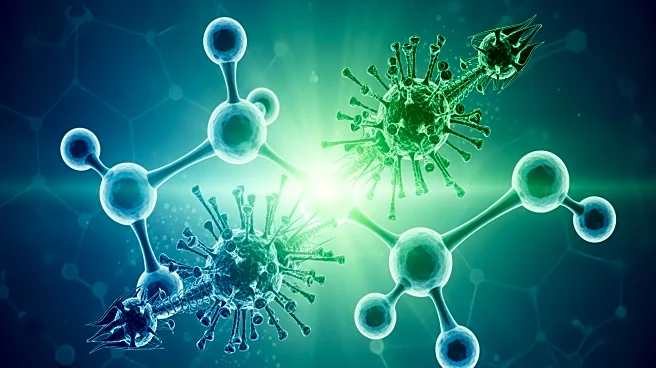
Recent research has highlighted the critical role of cholesterol in facilitating the membrane fusion process during SARS-CoV-2 viral entry. The study utilized a reconstituted vesicle-vesicle fusion system to mimic the viral invasion process, revealing
that cholesterol enhances the docking and fusion efficiency of the virus's spike protein with host cell membranes. The presence of cholesterol was found to significantly increase the probability of fusion, suggesting that it plays a crucial role in the viral entry mechanism. The study also explored the impact of cholesterol on the oligomeric state of the spike protein, finding that cholesterol-rich environments promote the formation of larger spike protein clusters, which are essential for efficient viral docking and fusion.
Why It's Important?
Understanding the role of cholesterol in SARS-CoV-2 infection could have significant implications for developing therapeutic strategies. By targeting cholesterol-dependent pathways, it may be possible to inhibit the virus's ability to enter host cells, potentially leading to new treatments for COVID-19. This research also underscores the importance of cholesterol in viral infections, which could influence future studies on other viruses that utilize similar entry mechanisms. The findings could lead to the development of cholesterol-modulating drugs or dietary interventions as part of a comprehensive approach to managing viral infections.
What's Next?
Future research may focus on exploring the potential of cholesterol-targeting therapies in clinical settings. Additionally, further studies could investigate the broader implications of cholesterol in viral infections beyond SARS-CoV-2, potentially leading to new antiviral strategies. Researchers may also examine the role of cholesterol in other stages of the viral life cycle, such as replication and assembly, to develop a more comprehensive understanding of its impact on viral pathogenesis.