




What's Happening?
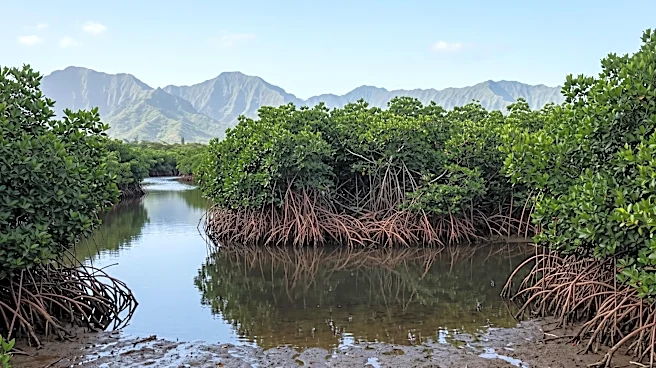
The Hawaii Department of Land and Natural Resources (DLNR) is initiating a large-scale restoration project in Kailua's Kawainui Marsh, calling for public volunteers to assist in removing invasive red mangroves. These mangroves, introduced over a century
ago, are currently clogging waterways and degrading the wetland habitat crucial for Hawaii's endangered native waterbirds, which rely on these areas for nesting and feeding. The restoration effort aims to revitalize natural water flow, enhance water quality, and mitigate flood risks within the marsh. This multi-year project is supported by funding from the National Fish and Wildlife Foundation and the National Oceanic and Atmospheric Administration. The DLNR's Oahu branch, Division of Forestry and Wildlife, and the Kailua-based nonprofit Hui o Koolaupoko, along with other community partners, will collaborate to restore nearly two miles of streams and wetlands surrounding Kawainui Marsh. Hui o Koolaupoko Executive Director Kristen Nalani Kane emphasized that community participation is vital for the long-term success of this initiative, which represents the first of many phases to achieve functional eradication of mangroves from Kailua's waterways.
Why It's Important?
This restoration project is critically important for the ecological health of Hawaii and the preservation of its unique biodiversity. The invasive red mangroves pose a significant threat to the survival of endangered native waterbirds by destroying their essential nesting and feeding grounds. Their removal will directly contribute to the recovery of these species, which are integral to Hawaii's natural heritage. Beyond wildlife, the project will improve water quality, benefiting the broader ecosystem and potentially human communities that rely on these waterways. Enhanced natural water flow will also reduce flood risks, offering a practical benefit to residents and infrastructure in the Kailua area. The collaborative approach, involving government agencies, local nonprofits, and community volunteers, sets a precedent for effective environmental conservation efforts, demonstrating how collective action can address long-standing ecological challenges. This initiative highlights the ongoing struggle against invasive species in delicate island ecosystems and the necessity of sustained, community-backed interventions to protect natural resources.
What's Next?
The restoration efforts are set to begin with monthly volunteer workdays, commencing on September 26. These initial phases will concentrate on removing smaller mangrove trees and seed pods along the Kawainui Stream, specifically between Kawainui Neighborhood Park's Kaha Garden and the Hamakua Street Bridge. The nonprofit Hui o Koolaupoko will be responsible for coordinating volunteers, schools, community groups, and both public and private landowners. Their strategy involves manually removing mangrove seedlings and propagation material, followed by the replacement of these invasive plants with native wetland species. This replanting is crucial to prevent reinvasion and to strengthen the habitat for local wildlife. The project is envisioned as a multi-phase endeavor, with community participation being a key factor for its long-term success in achieving functional eradication of mangroves from Kailua's waterways. Individuals aged 18 or older interested in volunteering can find more information and sign up through huihawaii.org/mangrove.html.
Beyond the Headlines
The Kawainui Marsh restoration project underscores a broader environmental challenge faced by many island ecosystems: the profound and often irreversible impact of introduced species. The red mangroves, while potentially beneficial in their native habitats, have become a destructive force in Hawaii, illustrating the delicate balance of ecosystems and the unintended consequences of human intervention. This initiative also highlights the cultural significance of land stewardship in Hawaii, where the concept of 'malama aina' (to care for the land) is deeply ingrained. The reliance on community volunteers reflects a growing trend in conservation, where local engagement is recognized as essential for the sustainability and success of environmental projects. Furthermore, the project's funding from national organizations like the National Fish and Wildlife Foundation and NOAA demonstrates a recognition at the federal level of the importance of local ecological restoration efforts, particularly in regions with high biodiversity and unique environmental vulnerabilities. The long-term success of this project could serve as a model for other communities grappling with similar invasive species challenges, emphasizing the importance of integrated approaches that combine scientific expertise, government support, and grassroots community action.