









What's Happening?
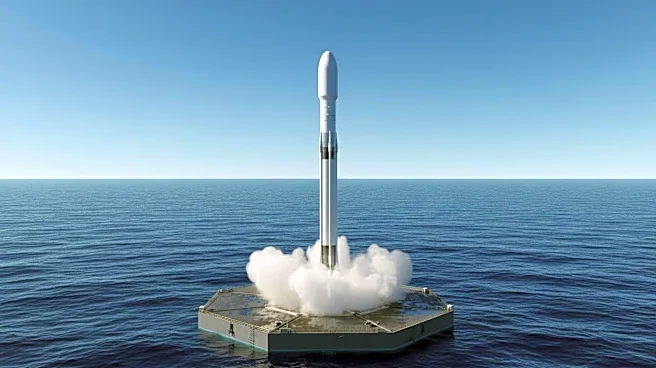
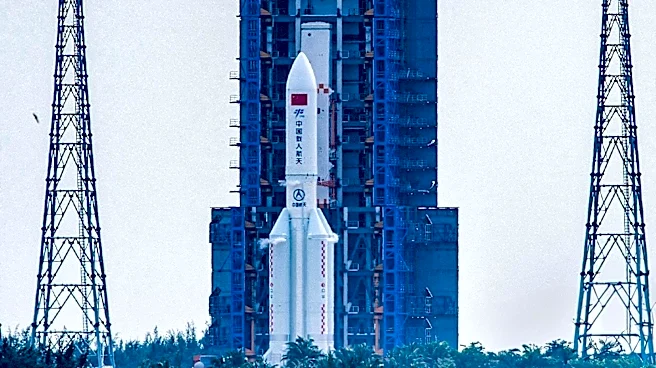
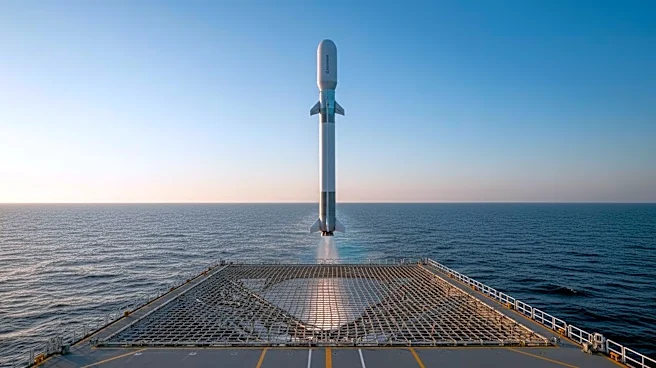
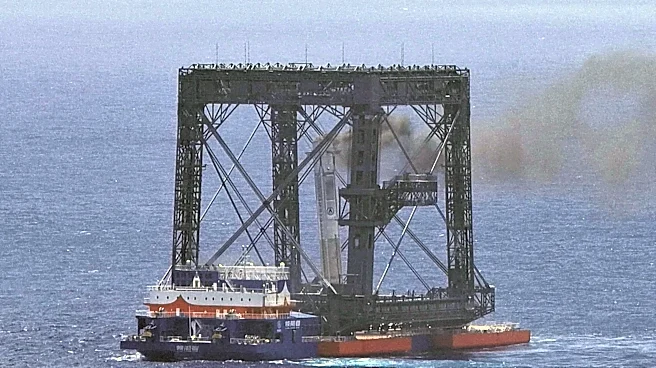
China has achieved a significant milestone in rocket reusability by successfully recovering the first stage of a Long March-10B rocket using a net-and-cable system on a sea-based platform. This innovative recovery method was demonstrated during a launch
from Hainan Island, where the rocket placed a satellite into orbit before being caught in a net on a ship in the South China Sea. The China Aerospace Science and Technology Corporation claims this is the world's first network-based recovery of a launch vehicle, marking a new step in the competition with SpaceX, which uses deployable legs for its Falcon 9 boosters.
Why It's Important?
This development is crucial as it represents China's efforts to enhance its space capabilities and compete with SpaceX in the commercial space industry. Reusable rockets significantly reduce launch costs and increase the frequency of satellite deployments, which are essential for maintaining a competitive edge in space exploration and commercial satellite services. China's success in this area could lead to more cost-effective and efficient space missions, potentially altering the dynamics of the global space industry. The ability to reuse rockets is a key factor in achieving sustainable space exploration and maintaining a robust presence in space.
What's Next?
China plans to re-fly the recovered booster before the end of 2026, which will be a critical test of the reliability and efficiency of their recovery method. If successful, this could establish a new standard for rocket reusability and further challenge SpaceX's dominance in the field. The ongoing advancements in China's space program may prompt increased investment and innovation in the U.S. space industry to maintain its leadership position. The outcome of these developments will likely influence future international collaborations and competition in space exploration.