
What's Happening?
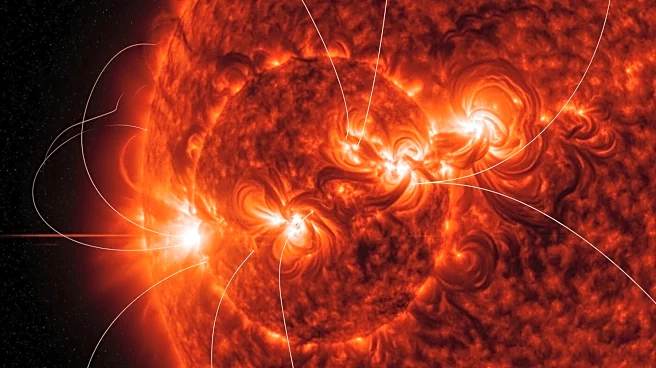
On December 6, 2025, a giant sunspot complex, comparable to the one that triggered the 1859 Carrington Event, is facing Earth. A strong geomagnetic storm peaked at G3 earlier this week, with NOAA expecting
minor storming from a recent solar eruption. December's Cold Moon, the last and highest supermoon of 2025, is also visible. The sunspot complex, AR 4294-4296, is one of the largest in the past decade, capable of producing high-end X-class solar flares. While the sunspot's size is significant, it does not guarantee a repeat of the Carrington Event.
Why It's Important?
The presence of a Carrington-class sunspot raises concerns about potential impacts on power grids, satellites, and communication systems. A storm of similar magnitude to the 1859 event could cause significant disruptions, including satellite failures and power grid damage. However, the current sunspot has not yet produced extreme events. The situation highlights the importance of monitoring space weather and preparing for potential impacts on technology and infrastructure. The convergence of the sunspot, geomagnetic storm, and supermoon offers a unique opportunity for scientific observation and public interest in space weather phenomena.
What's Next?
Scientists will continue to monitor the sunspot complex for potential solar flares and coronal mass ejections. The NOAA's Space Weather Prediction Center will provide updates on geomagnetic storm activity and potential impacts. Power grid operators and satellite controllers remain vigilant, ready to implement protective measures if necessary. The public may experience minor disruptions in GPS and radio communications. The Cold Moon supermoon will continue to be a visual highlight, though its brightness may interfere with viewing other celestial events like auroras and meteor showers.