




What's Happening?
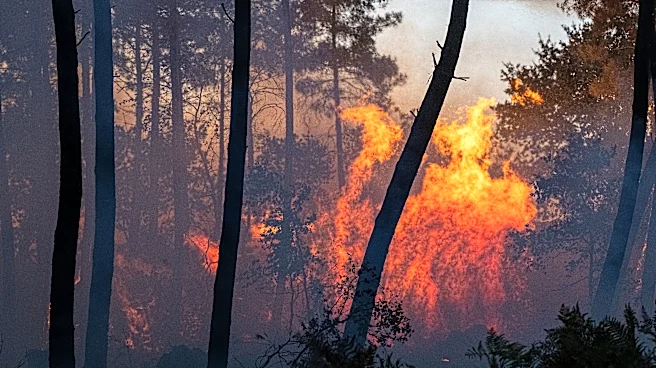
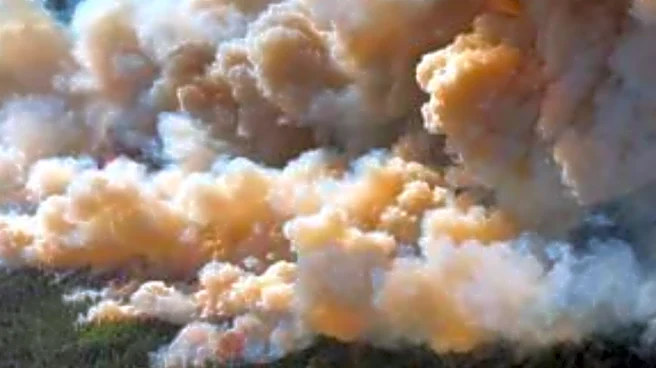
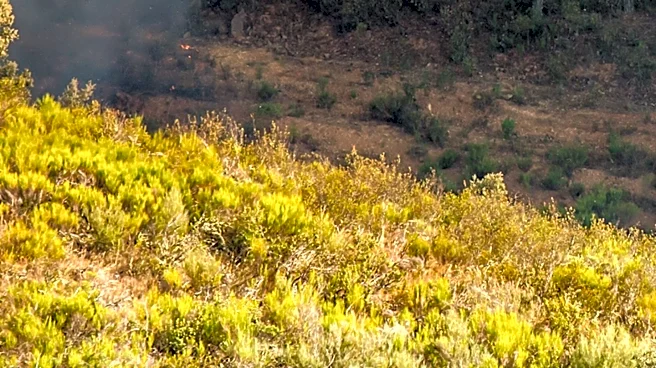
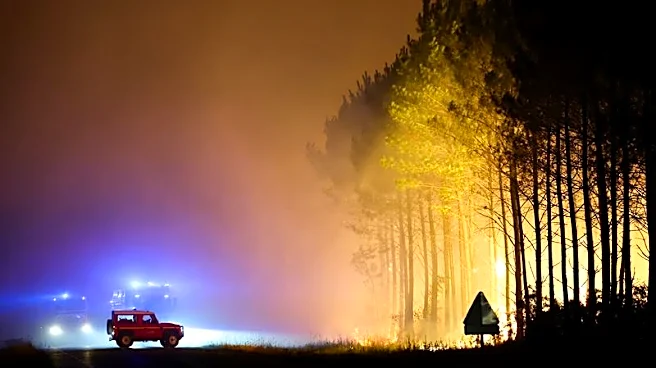
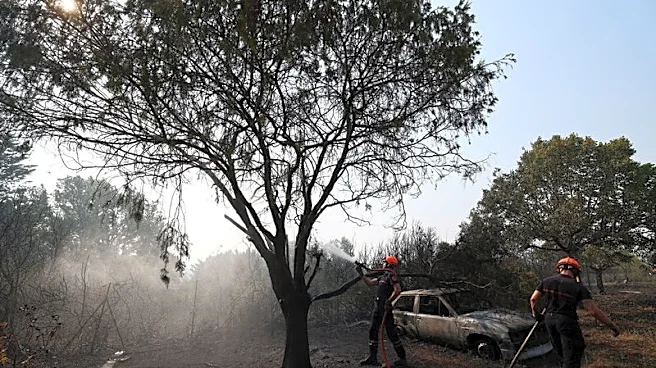
French authorities have ordered the complete evacuation of the Cap Ferret peninsula, a popular tourist destination on the Atlantic Coast, due to a major wildfire. The evacuation, which affects approximately 63,000 people, underscores the severity of the fire as smoke
and flames approach residential areas. The fire, which began in Saumos, has already destroyed 80 homes and threatens to cut off the only road out of the peninsula. French President Emmanuel Macron has requested assistance from the European Union to combat the blaze, which has already devastated 8,700 hectares of land. The situation is part of a broader pattern of wildfires across Europe, exacerbated by successive heatwaves.
Why It's Important?
The evacuation of Cap Ferret highlights the increasing frequency and intensity of wildfires in Europe, driven by climate change and extreme weather conditions. This event underscores the vulnerability of popular tourist regions to natural disasters, potentially impacting the local economy reliant on tourism. The fires also pose a significant threat to public safety and property, necessitating international cooperation and resource allocation to manage the crisis. The situation in France is mirrored in Spain, where a national emergency has been declared due to similar wildfire threats, indicating a broader European challenge in addressing climate-induced disasters.
What's Next?
As the fires continue to rage, French authorities are coordinating with the European Union to receive additional firefighting support. The situation remains dynamic, with potential for further evacuations and property damage. The French government may need to implement stricter environmental and safety regulations to mitigate future risks. Additionally, the ongoing heatwave is expected to persist, potentially exacerbating the situation and affecting other sectors, such as agriculture and energy, due to increased temperatures impacting crop conditions and nuclear plant operations.