







What's Happening?
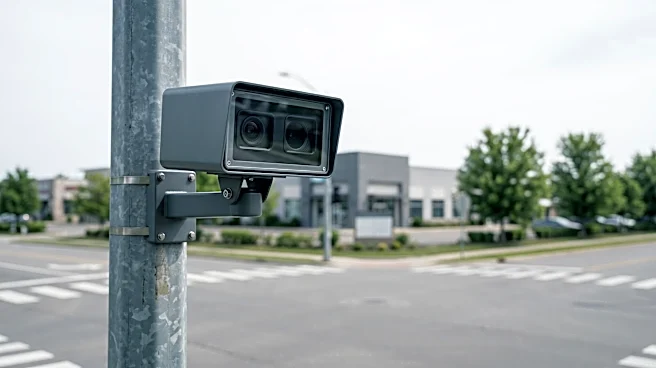
Flock Safety, a company specializing in license-plate cameras, video, gunshot detection, and AI-powered search software, is experiencing significant growth but is also embroiled in escalating data privacy controversies. Founded in 2017 by Garrett Langley,
the company initially targeted homeowners' associations and has since expanded to over 5,000 communities across 49 states. Flock Safety has raised $500 million, achieving an $8.3 billion valuation and $500 million in annual recurring revenue in the first half of this year. However, privacy experts and civil liberties groups allege that law enforcement has misused the cameras, including for stalking and sharing data across jurisdictions, potentially with ICE, in violation of state laws. This has led to increased vandalism of Flock cameras nationwide and renegotiations of contracts by cities like Los Angeles, Boston, Flagstaff, and Santa Clara over data ownership concerns. The core issue revolves around Flock's contractual language, which some interpretations suggest allows the company to retain and use collected data for its own purposes, including training machine learning algorithms.
Why It's Important?
The controversies surrounding Flock Safety highlight a critical tension between public safety initiatives and individual data privacy rights in the U.S. The widespread adoption of Flock's technology by law enforcement and communities signifies a growing reliance on surveillance tools to combat crime. However, the allegations of misuse and the ambiguity of data ownership clauses in Flock's contracts raise significant concerns about potential civil liberties infringements. If police departments can share data across jurisdictions without clear oversight, it could lead to a national surveillance network with implications for immigration enforcement and other areas, potentially bypassing state-level protections. The renegotiation of contracts by major cities indicates a growing awareness and pushback against broad data collection and usage policies, which could set precedents for how technology companies interact with government agencies regarding sensitive personal data. The debate also impacts the venture capital landscape, as Flock's high valuation is now being scrutinized in light of these ethical and legal challenges, potentially influencing future investments in surveillance technology.
What's Next?
Flock Safety recently introduced new guardrails to address system abuse, including advocating for a seven-day data retention policy for its customers, a reduction from its previous default of 30 days. However, this remains a recommendation, not a mandatory rule, allowing individual cities to set their own retention periods, such as the LAPD's five-year policy. This suggests ongoing negotiations and potential legal challenges regarding data retention and usage. Major stakeholders, including civil liberties groups and privacy advocates, are likely to continue scrutinizing Flock's practices and pushing for stricter regulations and greater transparency. Cities that have paused or dropped contracts with Flock may explore alternative solutions or demand more stringent contractual terms from other surveillance technology providers. The outcome of these discussions and contract renegotiations could shape the future of public-private partnerships in surveillance and data management, potentially leading to new legislative efforts to regulate the use of such technologies at both state and federal levels.
Beyond the Headlines
The Flock Safety controversy delves into deeper ethical and societal implications concerning the balance between security and freedom in a technologically advanced society. The concept of 'safer for whom?' raised by the company's CEO, Garrett Langley, encapsulates the core dilemma. While the technology aims to enhance public safety, the potential for abuse, such as stalking or unauthorized data sharing, raises questions about the erosion of privacy and the potential for discriminatory practices. The debate also touches upon the power dynamics between private corporations, law enforcement, and citizens, particularly regarding who controls and benefits from vast amounts of collected data. The vandalism of cameras across the country reflects a segment of the public's strong opposition to pervasive surveillance, highlighting a growing distrust in both technology providers and government agencies. This situation could catalyze broader discussions about digital rights, the need for robust oversight mechanisms, and the development of ethical guidelines for AI and surveillance technologies to prevent a 'surveillance state' scenario.