

What's Happening?
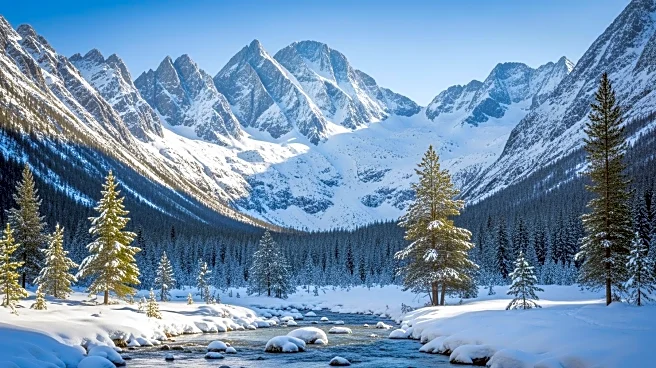
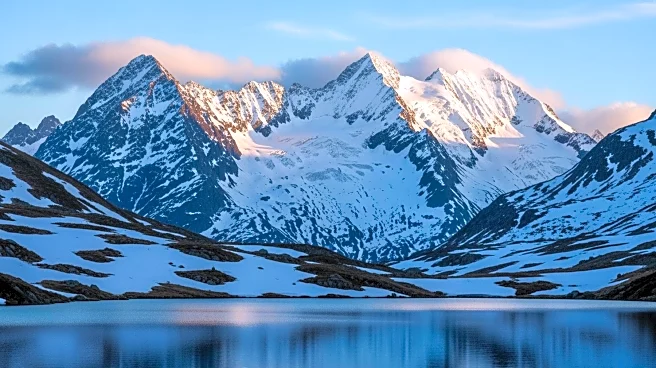
Recent snow-producing storms have led to an increase in California's snowpack, according to water officials. Despite the boost, officials caution that the snowpack levels are still insufficient to meet the state's water needs. The storms have primarily
affected Northern California, contributing to the snowpack that is crucial for the state's water supply. The snowpack serves as a natural reservoir, releasing water during the warmer months, which is vital for agriculture, urban use, and environmental conservation. The increase in snowpack is a positive development, but officials stress the need for continued precipitation to address long-term water shortages.
Why It's Important?
The increase in California's snowpack is significant as it impacts the state's water resources, which are critical for various sectors including agriculture, urban development, and environmental conservation. The snowpack acts as a natural reservoir, and its levels directly affect water availability during the dry season. While the recent storms have provided some relief, the ongoing drought conditions highlight the need for sustainable water management practices. The situation underscores the importance of climate resilience and adaptation strategies to ensure water security in the face of changing weather patterns.
What's Next?
Water officials will continue to monitor snowpack levels and precipitation patterns to assess the state's water supply outlook. Efforts to enhance water conservation and management practices are likely to be prioritized to mitigate the impacts of potential water shortages. Policymakers may consider implementing measures to improve water infrastructure and storage capacity. The agricultural sector, which heavily relies on water resources, may need to adapt to fluctuating water availability. Public awareness campaigns and initiatives to promote water conservation could be intensified to address the challenges posed by the state's water situation.