





What's Happening?
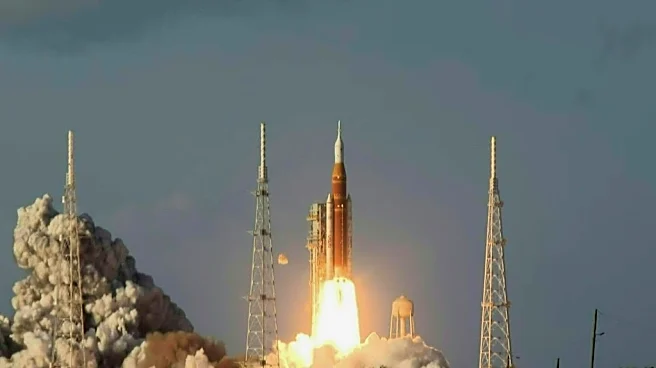
NASA has successfully launched the Artemis II mission, marking the first crewed lunar mission in over 50 years. The mission, which took off from Kennedy Space Center in Florida, includes a team of four astronauts: Reid Wiseman, Victor Glover, and Christina
Koch from NASA, along with Jeremy Hansen from the Canadian Space Agency. This mission aims to orbit the moon, setting the stage for future lunar exploration and potential human settlement. The Artemis II mission is a significant step in NASA's long-term plan to establish a sustainable human presence on the moon and eventually send astronauts to Mars.
Why It's Important?
The Artemis II mission is pivotal for several reasons. It represents a major milestone in human space exploration, as it is the first time astronauts will travel to the moon since the Apollo missions ended in 1972. This mission is part of NASA's broader Artemis program, which aims to return humans to the lunar surface and establish a sustainable presence there by the end of the decade. The success of Artemis II could pave the way for future missions that will explore the moon's south pole, where water ice is believed to exist. This could have significant implications for future space exploration, as water can be used for life support and fuel. Additionally, the mission strengthens international collaboration in space exploration, with the inclusion of a Canadian astronaut.
What's Next?
Following the successful launch of Artemis II, NASA will focus on the next phase of the Artemis program, which includes the Artemis III mission. This mission aims to land astronauts on the lunar surface, potentially as early as 2028. The data and experience gained from Artemis II will be crucial in planning and executing future missions. NASA will also continue to develop the necessary infrastructure and technology to support long-term human presence on the moon, including habitats, power systems, and transportation. The success of these missions could also influence international space policy and inspire new partnerships and investments in space exploration.