







What's Happening?
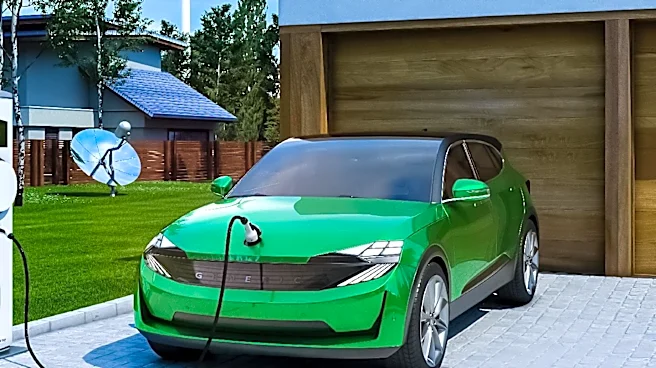
Engineers at UC Irvine, in collaboration with partners like KB Home, Kia Corp., and Wallbox, are actively working to integrate vehicle-to-home (V2H) charging as a common residential power solution. V2H technology allows plug-in electric vehicles (EVs)
to power homes using energy stored in their batteries, offering a backup power source during outages and enabling homeowners to reduce electricity imports during peak utility rates. The system utilizes bidirectional electric vehicle supply equipment (EVSE) to manage energy flow between the EV, solar panels, and the electric utility. A pilot program in Menifee, California, involves residents in a sustainable energy community testing V2H systems with Kia EV9 SUVs and Wallbox chargers, providing crucial data to researchers. Scott Samuelsen, founding director of APEP and professor of mechanical and aerospace engineering at UC Irvine, leads this research, emphasizing data acquisition to understand the EV's role in future homes. The project has addressed various structural, technical, and regulatory hurdles, including securing an interconnect agreement with Southern California Edison.
Why It's Important?
The widespread adoption of V2H technology could significantly enhance energy resilience for U.S. households, particularly during power outages or natural disasters. With EV batteries being substantially more energy-dense than typical home batteries, a fully charged EV could power a home for days, potentially preventing the need for rolling blackouts during periods of high energy demand. This innovation also offers economic benefits to homeowners by allowing them to reduce electricity consumption from the grid during expensive peak hours, potentially saving up to $600 annually in utility costs. For utilities, V2H can help stabilize the grid by reducing the need to generate and transmit as much energy during peak times. The project's success in navigating regulatory processes, such as obtaining interconnect agreements, sets a precedent for broader implementation across the U.S., fostering a more decentralized and resilient energy infrastructure. The collaboration between academic institutions, automakers, and technology developers is crucial for overcoming technical and regulatory challenges.
What's Next?
The UC Irvine project aims to make V2H technology widely adopted by consumers. Future steps include refining the user interface for V2H systems to ensure ease of operation for homeowners, as highlighted by initial user feedback. The ongoing data collection from the Menifee pilot program will continue to inform improvements in V2H functionality and integration. As regulatory bodies become more aware of and adapt to V2H technology, the interconnection process for such systems is expected to become more streamlined. The commercialization of certified bidirectional EVSE units, like Wallbox's Quasar 2, will pave the way for broader market availability. Continued collaboration among universities, automakers, and utility companies will be essential to address remaining technological and regulatory hurdles, ultimately facilitating the widespread integration of V2H into residential energy management systems across the U.S.
Beyond the Headlines
Beyond its immediate practical benefits, V2H technology represents a fundamental shift in how individuals interact with the energy grid. It transforms electric vehicles from mere transportation devices into active components of a smart home energy ecosystem, blurring the lines between personal mobility and residential power infrastructure. This integration has profound implications for energy independence, allowing homeowners greater control over their energy consumption and supply. Ethically, it raises questions about data privacy as vehicle and home energy usage data are collected and analyzed. Culturally, it could foster a greater sense of self-sufficiency and resilience within communities, particularly in regions prone to grid instability. The long-term impact could include a more distributed and robust energy grid, less susceptible to centralized failures, and a redefinition of the role of personal vehicles in daily life.