
What's Happening?
Ukraine has significantly adapted its logistical strategies to maintain operational effectiveness amidst ongoing Russian attacks. Initially, before the full-scale invasion, Ukraine dispersed portions of
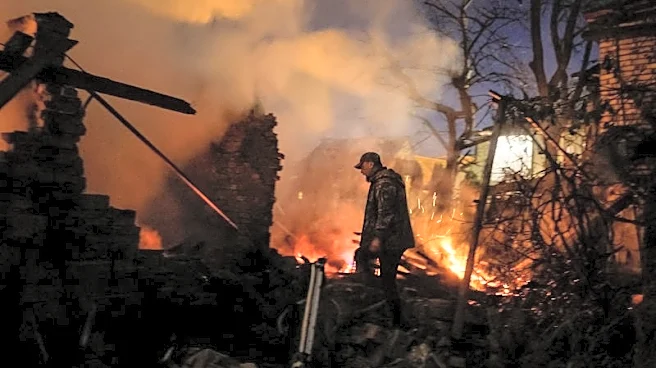
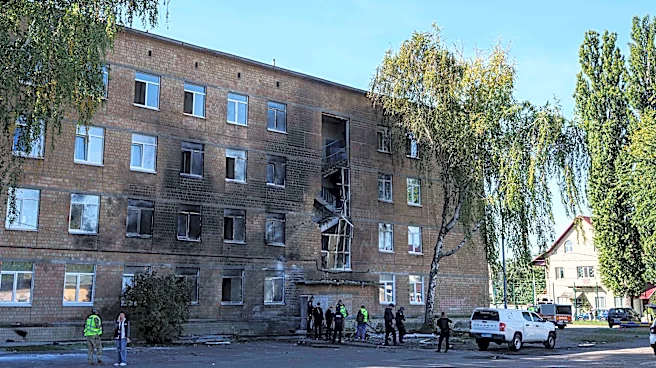
its ammunition stocks. During the early stages of the conflict, Russian forces largely failed to detect significant Ukrainian rail movements, which were crucial for transporting forces and materiel. As Russian reconnaissance capabilities improved, Ukraine shifted its logistics to smaller supply nodes, distributed caches, and prioritized night movement and protected mobility. Short exposure windows for logistical operations became standard practice. Additionally, unmanned systems have been deployed to deliver supplies near the front lines, thereby reducing the exposure of trucks and personnel to enemy fire. This evolution in logistics is a direct response to Russia's efforts to disrupt Ukraine's supply lines, which are critical for sustaining military operations.
Why It's Important?
The adaptation of Ukraine's logistics is vital for its continued defense and operational endurance. By dispersing ammunition stocks and utilizing rail transport effectively, Ukraine has mitigated the impact of initial Russian targeting. The shift to smaller, more mobile, and protected supply chains, along with night operations, demonstrates a proactive approach to counter evolving threats. The use of unmanned systems for last-mile delivery highlights an innovative application of technology to enhance force protection and maintain supply flow in high-risk areas. This strategic flexibility in logistics directly impacts Ukraine's ability to sustain its forces, conduct maneuvers, and regenerate combat power, preventing the operational collapse seen in other conflicts where logistics were not adequately protected. The success of these adaptations underscores the critical role of resilient supply chains in modern warfare.
What's Next?
Ukraine is expected to continue refining its logistical protection strategies, focusing on dispersion, redundancy, and hardening of critical systems. This includes further development of mobile air defense systems to protect supply routes and logistical nodes, as well as enhancing the capacity for rapid repair and reconstitution of damaged equipment and infrastructure. The ongoing coordination between strikes on transportation infrastructure, port facilities, and energy systems by Russia suggests that Ukraine will face continuous pressure on its supply lines. Therefore, further innovation in protected mobility, alternative transport routes, and the integration of advanced unmanned systems for logistical support will likely be prioritized. The long-term sustainability of Ukraine's defense will heavily depend on its ability to maintain and evolve these robust logistical networks.
Beyond the Headlines
The Ukrainian experience in adapting its logistics offers profound lessons for military strategists globally, particularly regarding the vulnerability of traditional supply chains in an era of advanced reconnaissance and precision strikes. The emphasis on dispersion, protected mobility, and the integration of unmanned systems represents a paradigm shift in military logistics, moving away from centralized, easily targetable hubs. This conflict highlights that operational endurance is not solely about tactical prowess but equally about the resilience of supporting systems like logistics, command and control, and air defense. The ethical implications of using unmanned systems for supply delivery also warrant consideration, as it reduces human exposure to danger but introduces new complexities in autonomous operations. This ongoing adaptation could influence future military doctrines and procurement strategies for nations seeking to enhance their own logistical resilience against sophisticated adversaries.