






What's Happening?
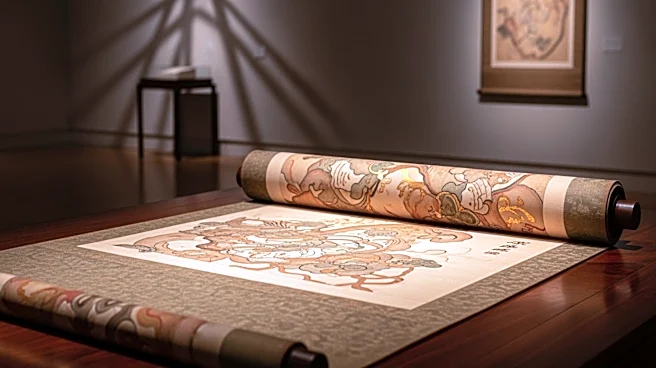
The Yale Center for British Art in New Haven, Connecticut, is showcasing a 37-foot-long Indian scroll from the early 19th century, known as the Lucknow scroll, for the first time. This exhibition is part of 'Painters, Ports and Profits: Artists and the East
India Company, 1750-1850,' which runs until June 21. The scroll, created between 1821 and 1826, depicts an expansive view of Lucknow, India, and is made from 33 sheets of laid paper, using watercolor, gouache, and gold. Due to its size and fragility, only half of the scroll is displayed at a time, with sections being unrolled throughout the exhibition. The scroll was created during the reign of Ghazi-ud-Din Haidar Shah, who declared independence from the Mughal emperor in 1819. The scroll's historical and material significance is highlighted by its mysterious origins, as the artists and patron remain unknown.
Why It's Important?
The exhibition of the Lucknow scroll at Yale Center for British Art is significant as it provides insight into the cultural and historical exchanges between India and Britain during the early 19th century. The scroll serves as a testament to the artistic traditions of the Indian subcontinent and the influence of the East India Company on art and commerce. By displaying this artifact, the exhibition raises awareness of the complexities of colonial history and the role of art in documenting and interpreting these narratives. The scroll's conservation and display also highlight the importance of preserving cultural heritage and the challenges involved in maintaining such delicate historical artifacts.
What's Next?
As the exhibition continues, visitors will have the opportunity to view different sections of the Lucknow scroll, offering a dynamic experience that encourages repeat visits. The ongoing display of the scroll may prompt further scholarly research into its origins and the broader context of its creation. Additionally, the exhibition may inspire similar institutions to explore and exhibit other historical artifacts that shed light on the cultural exchanges between colonial powers and the regions they influenced.
Beyond the Headlines
The exhibition of the Lucknow scroll at Yale Center for British Art not only highlights the artistic and historical significance of the artifact but also raises questions about the ethics of displaying colonial-era objects. It prompts discussions on the ownership and repatriation of cultural heritage, as well as the responsibilities of museums in presenting such works. The scroll's display may also influence contemporary artists and curators to explore themes of empire, commerce, and artistic exchange in their work, fostering a deeper understanding of the interconnectedness of global cultures.