






What's Happening?
Madagascar is implementing a comprehensive strategy to significantly increase its international tourist arrivals, aiming for 600,000 visitors annually by 2030. This ambitious goal represents a doubling of current figures and is centered on sustainable
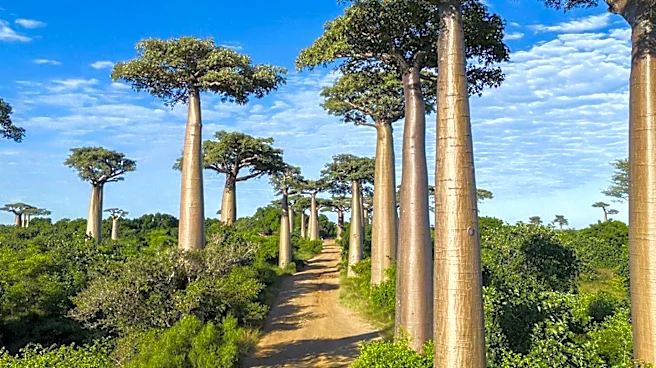
ecotourism. The Ministry of Tourism in Antananarivo is spearheading this initiative, focusing on infrastructure improvements, enhanced security measures, and the development of community-led conservation efforts. Key aspects include expanding international commercial flight routes, upgrading regional airports to accommodate larger aircraft, and investing in hospitality training programs. The strategy emphasizes safeguarding Madagascar's unique biodiversity, such as lemurs and baobabs, through strict ecotourism frameworks and low-impact infrastructural developments. A significant portion of national park entry revenues is being directed back into local communities to incentivize their active participation in conservation and combat deforestation and illegal wildlife trafficking. Grassroots ecotourism cooperatives are also being fostered to offer authentic cultural immersions and support local schools, healthcare clinics, and reforestation projects.
Why It's Important?
This ecotourism blueprint is crucial for Madagascar's economic development, aiming to generate sustainable, long-term revenue streams while preserving its irreplaceable natural heritage. By integrating local communities into conservation efforts through economic feedback loops, the initiative seeks to empower indigenous populations as active stewards of the land. This approach helps to mitigate the negative impacts often associated with mass tourism, such as environmental degradation and cultural erosion. For the global tourism industry, Madagascar's model could serve as a case study for balancing economic growth with environmental protection, particularly in biodiversity-rich regions. The focus on sustainable practices, community involvement, and controlled visitor numbers aims to prevent over-tourism and ensure that the economic benefits are distributed more evenly across diverse geographic regions. This strategy highlights a growing trend in the travel sector towards conservation-first destinations, influencing how other nations might approach tourism development in sensitive ecological areas.
What's Next?
Madagascar will continue to forge strategic partnerships with regional and international airlines to establish new direct air links, connecting key European and African transport hubs to the island's primary entry points. Capital investments in regional airports will proceed, focusing on upgrading runways and terminal facilities. The government, in collaboration with international conservation NGOs, will continuously update regulations to monitor carbon footprints, waste management, and water usage across all hospitality sectors. Further development of visitor management systems, trail maintenance, and interpretive centers within national parks like Andasibe-Mantadia and Ranomafana is expected. The expansion of grassroots ecotourism cooperatives will also be a priority, aiming to offer more specialized guided treks, botanical tours, and cultural exchanges. Travelers are encouraged to choose eco-friendly accommodations, adhere to local conservation practices, and select certified sustainable tour operators to support these ongoing efforts.
Beyond the Headlines
The deeper implications of Madagascar's ecotourism strategy extend to the global discourse on sustainable development and the intrinsic value of biodiversity. By demonstrating that preserved natural environments can generate significant economic returns through responsible tourism, Madagascar challenges traditional development models that often prioritize resource extraction over conservation. This approach fosters a shift in perception, where natural capital is viewed not just as a resource to be exploited, but as an asset to be protected and leveraged sustainably. The emphasis on community-led initiatives also addresses issues of social equity, ensuring that the benefits of tourism reach local populations and empower them to protect their ancestral lands. This model could inspire other developing nations with rich biodiversity to adopt similar conservation-first tourism strategies, potentially leading to a broader global movement towards more ethical and environmentally conscious travel. It also highlights the ethical responsibility of travelers to support destinations committed to sustainability.