


What's Happening?
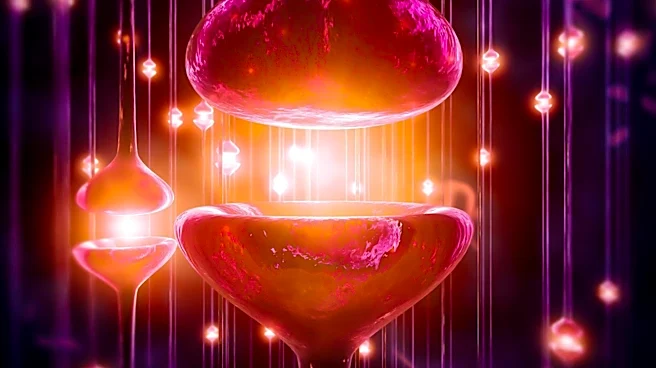
A recent study has investigated the role of neuroligins, a type of synaptic cell-adhesion molecule, in astrocytes and their impact on synapse formation. The research involved a genetic approach to delete neuroligins Nlgn1-3 from astrocytes in mice, aiming
to determine their role in synapse formation and astrocyte morphology. The findings revealed that the deletion of these neuroligins did not affect the density of excitatory or inhibitory synapses in the hippocampus or cortex, nor did it alter the cytoarchitecture of astrocytes. This suggests that neuroligins in astrocytes are not essential for synapse formation or maintenance, challenging previous studies that suggested a significant role for astrocytic neuroligins in synapse formation.
Why It's Important?
The study provides critical insights into the specific roles of neuroligins in the brain, particularly distinguishing the functions of neuronal versus astrocytic neuroligins. Understanding these roles is crucial for advancing knowledge in neurobiology and could have implications for neurological research and potential therapies. The findings suggest that while neuroligins are important for synaptic function, their role in astrocytes may not be as significant as previously thought, which could redirect future research efforts towards other molecular mechanisms in astrocytes.