


What's Happening?
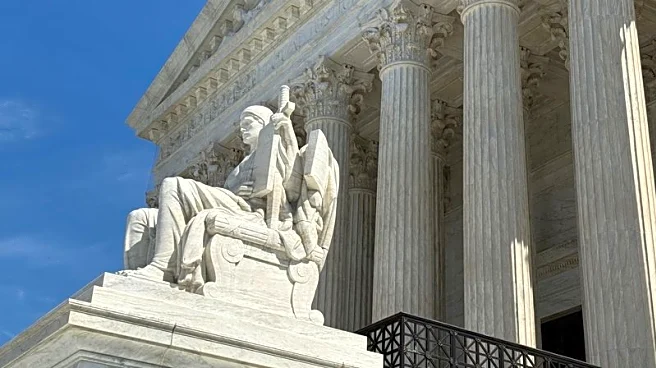
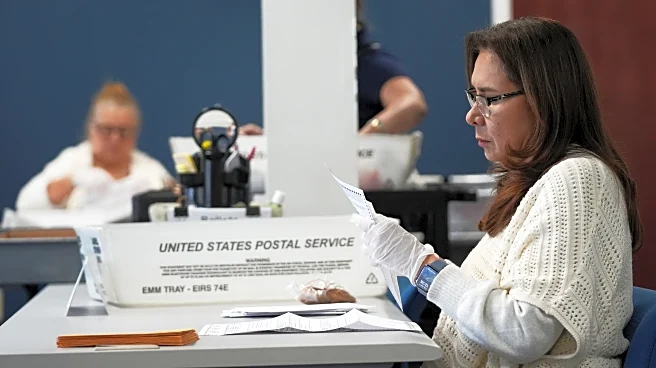
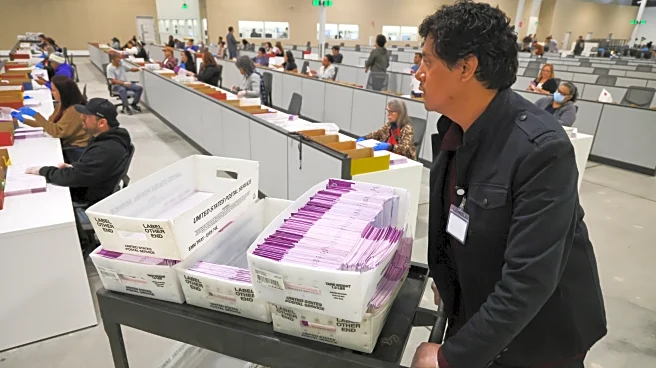
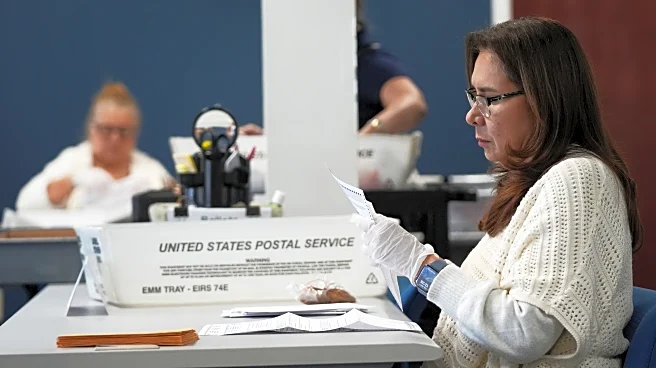
The Supreme Court is currently deliberating a significant case concerning Mississippi's mail-in ballot law, which permits the counting of ballots postmarked by Election Day for up to five days afterward. This case has drawn attention due to its implications
for election procedures and the balance of state versus federal authority. During oral arguments, Mississippi's solicitor general, Scott Stewart, faced challenging questions from conservative justices, prompting liberal justices, including Justice Ketanji Brown Jackson, to intervene. The case, Watson v. RNC, pits Mississippi against the Republican National Committee and other parties who oppose the state's pandemic-era policy. The legal debate centers on whether Congress's establishment of a national Election Day in 1845 inherently requires that all voting conclude on that day. The outcome of this case could impact similar laws in at least 14 other states.
Why It's Important?
This case is pivotal as it addresses the broader issue of how mail-in ballots are handled across the United States, a topic that has gained prominence in recent elections. The decision could influence future election laws and practices, particularly concerning the timing and processing of mail-in ballots. The case also highlights the ongoing tension between state autonomy in managing elections and federal oversight. A ruling in favor of Mississippi could affirm states' rights to set their own election procedures, while a decision against could lead to more uniform federal standards. The case is also significant in the context of President Trump's efforts to tighten mail-in voting regulations, reflecting broader political and ideological divides over election integrity and accessibility.
What's Next?
The Supreme Court is expected to issue a decision by the end of June. The ruling could have immediate implications for upcoming elections, particularly if it results in changes to mail-in voting procedures. Stakeholders, including political parties and civil rights organizations, are likely to respond based on the outcome, potentially leading to further legal challenges or legislative efforts. The decision may also influence ongoing debates in Congress regarding election reform, including President Trump's proposed Safeguard American Voter Eligibility (SAVE) America Act, which seeks to impose stricter mail-in voting requirements.