

What's Happening?
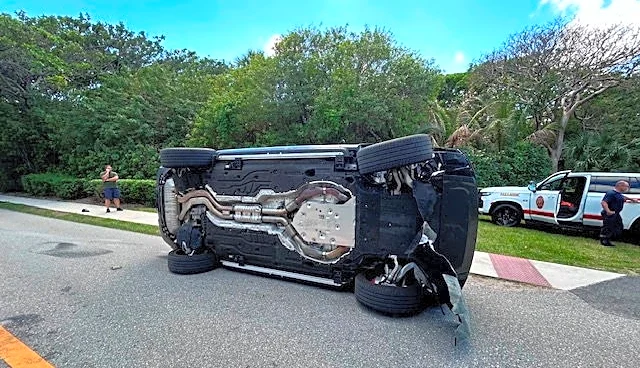
Tiger Woods is facing legal challenges following a rollover crash in Florida, where he refused to take a urine test. The incident occurred on a residential road in Jupiter Island, where Woods' vehicle clipped a truck and rolled over. Although he showed
signs of impairment, a Breathalyzer test indicated no alcohol presence. However, Woods refused a urine test, which under a recent change in Florida law, is now a misdemeanor offense. This refusal, along with charges of driving under the influence and property damage, could lead to a DUI case against him. The Martin County Sheriff's Office noted Woods' lethargic demeanor and suspected medication use. Despite his cooperation with investigators, the lack of definitive lab results presents a challenge for prosecutors, who may rely on deputy testimony and video evidence.
Why It's Important?
The case against Tiger Woods highlights the implications of recent changes in Florida's DUI laws, which now penalize refusal to submit to tests even for first-time offenders. This legal shift could impact how DUI cases are prosecuted in the state, potentially leading to more convictions based on circumstantial evidence. For Woods, a second DUI charge could result in harsher penalties, including possible jail time, given his previous arrest in 2017. The case also underscores the ongoing scrutiny faced by public figures and the legal complexities involved in high-profile incidents.
What's Next?
Prosecutors will likely build their case using available evidence, such as deputy testimonies and video footage, to demonstrate Woods' impairment. Woods' legal team may challenge the lack of scientific evidence, which could influence the trial's outcome. The case may also prompt discussions on the effectiveness and fairness of Florida's DUI laws, particularly regarding the treatment of high-profile individuals. The outcome could set a precedent for similar cases in the future.