


What's Happening?
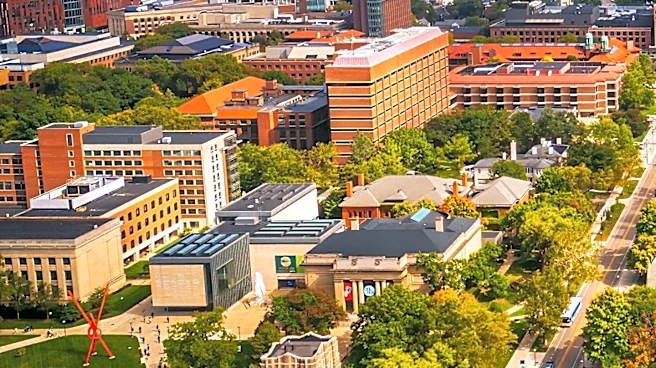
George Washington University officials have released an 83-page, five-year roadmap detailing the relocation plan for various programs, offices, schools, and departments from its Virginia Science and Technology Campus (VSTC). This move follows the University's
sale of the VSTC property to Amazon Data Services in February for $427 million, with operations permitted to continue until late February 2031. The roadmap outlines the transition schedule for 15 units, including the School of Nursing, the George Washington University Museum, The Textile Museum’s Avenir Foundation, and research labs within the School of Engineering & Applied Science, as well as administrative services like IT and human resources. While specific new locations are not listed, the plan provides a timeline for each unit's move and the estimated space requirements. The University anticipates needing only half the space currently available at VSTC, with officials exploring options to build or purchase new real estate for larger units. The relocation will occur in four phases: preparing, getting ready, transitioning, and adjusting and supporting community members. The earliest moves are slated for summer 2028, with the largest unit, the School of Nursing, tentatively scheduled to move between summer and fall 2030.
Why It's Important?
This relocation plan is significant for George Washington University as it marks a major restructuring of its academic and administrative footprint. The sale of VSTC and subsequent consolidation efforts reflect a strategic decision to optimize space utilization and potentially centralize operations closer to the Foggy Bottom Campus. With an estimated $350 million remaining from the sale after relocation costs, the University has substantial funds to invest in new facilities or other strategic initiatives. The plan's emphasis on individual unit discussions and a flexible workplace model, including a pilot for shared work settings, indicates a shift towards modern operational efficiencies and potentially remote work options for some positions. This could impact faculty, staff, and students by altering commuting patterns, access to resources, and the overall campus experience. The reduction in required space, partly due to underutilization and a 32% decline in VSTC enrollment since 2018, suggests a re-evaluation of physical infrastructure needs in higher education.
What's Next?
Following the release of the roadmap, George Washington University will hold a town hall for VSTC faculty and staff to discuss the relocation plan further. After this, the University will proceed with the implementation of the roadmap, which includes determining the overall project budget and developing individualized relocation plans with each unit lead. The current preparation phase involves site acquisition, renovation, campus memorialization, and staff decisions. Plans for acquiring new real estate are currently in flux, with officials aiming for locations in closer proximity to the Foggy Bottom Campus where feasible. The University will also launch a workplace pilot in Enterprise Hall to test shared work settings for administrative functions with hybrid employees, which could inform future space reduction strategies. Surveys will be conducted to assess space use, culture, and productivity, and check-in town halls will be held to support community members throughout the transition. The University has stated that layoffs are not envisioned at this point as part of this roadmap exercise.
Beyond the Headlines
The George Washington University's relocation from its Virginia Science and Technology Campus highlights broader trends in higher education, including the re-evaluation of physical campus footprints and the increasing adoption of flexible work models. The decision to consolidate operations and potentially reduce physical space reflects a response to changing enrollment patterns and the growing viability of hybrid and remote work. This move could set a precedent for other universities facing similar challenges of underutilized assets and the need for modernized infrastructure. Ethically, the University's commitment to intentional transitions and support for community members, including avoiding layoffs at this stage, will be crucial for maintaining morale and ensuring a smooth transition. Legally, the acquisition of new real estate and potential construction projects will involve complex zoning and regulatory processes. Culturally, the shift could foster new ways of working and learning, potentially impacting the sense of community and identity for departments that have long been established at VSTC.