







What's Happening?
The European UPWEARS project, funded by the Horizon Europe program, is developing a new generation of technical textiles using bio-based resources such as flax, hemp, and cork. This four-year project, running from September 2024 to August 2028 with a budget
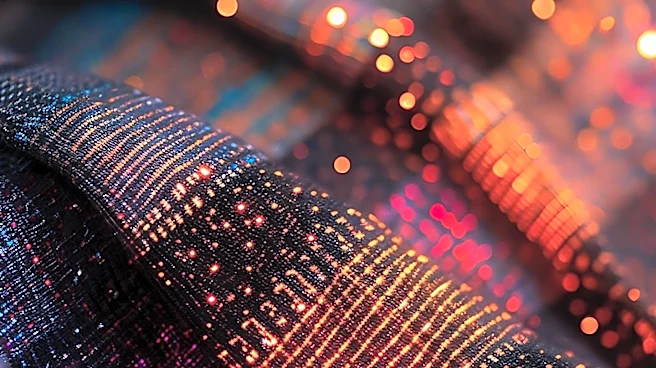
of 7.8 million euros, involves 14 academic and industrial partners from seven countries. The initiative aims to create high-performance, smart, and environmentally friendly textiles by integrating plant-based fibers with microelectronics and artificial intelligence. Researchers at FEMTO-ST, a partner in the project, are contributing to understanding the mechanical behavior of plant fibers and developing microelectronic functions for textiles. This includes studying how plant fibers respond to their hygrothermal environment using X-ray microtomography and integrating gas microsensors directly into textiles to monitor exposure to pollutants. These sensors, made from bio-based materials like lignin, are designed to be compact, energy-efficient, and capable of detecting chemical signatures in real time when embedded in flexible fabrics.
Why It's Important?
The UPWEARS project represents a significant advancement in sustainable textile technology, with potential implications for U.S. industries focused on materials science, wearable technology, and environmental monitoring. By utilizing bio-based resources, the project addresses growing global demands for eco-friendly products and reduces reliance on synthetic materials, which could influence material sourcing and manufacturing practices in the U.S. textile sector. The development of textiles capable of real-time environmental monitoring opens new avenues for applications in personal safety, industrial hygiene, and smart city initiatives. U.S. companies in these fields could benefit from adopting similar research directions, fostering collaborations, or developing complementary technologies. Furthermore, the integration of artificial intelligence with smart textiles could lead to more sophisticated data analysis and predictive capabilities, enhancing the value proposition of wearable devices and creating new market opportunities for U.S. tech firms.
What's Next?
Over the next four years, the UPWEARS project will focus on improving sensor performance and their seamless integration into flexible textiles. The research aims to refine the use of bio-based materials for sensor development, ensuring they are energy-efficient and operate effectively at room temperature. The project will also work on developing a complete value chain, from processing plant-based fibers to their incorporation into functional, connected, and recyclable textiles. The ultimate goal is to create clothing capable of detecting and analyzing its environment in real time, with potential applications in technical textiles, air quality monitoring, and wearable environmental monitoring systems. The findings and technologies developed by the consortium could lead to new industry standards for sustainable and smart textiles, influencing future product development and regulatory frameworks globally.
Beyond the Headlines
The UPWEARS project highlights a broader shift towards circular economy principles within the textile industry, emphasizing sustainability from material sourcing to product end-of-life. The use of plant-based fibers not only reduces environmental impact but also promotes agricultural innovation and diversification. The integration of environmental sensing capabilities into clothing raises ethical considerations regarding data collection and privacy, particularly if such textiles become widespread for public health or security monitoring. Moreover, the project's success could accelerate the adoption of smart textiles in various sectors, blurring the lines between fashion, technology, and environmental science. This convergence could lead to new interdisciplinary fields and job opportunities, while also challenging traditional manufacturing models and supply chains. The long-term impact could be a fundamental change in how we perceive and interact with our clothing, transforming it into an active interface with our surroundings and personal health.