







What's Happening?
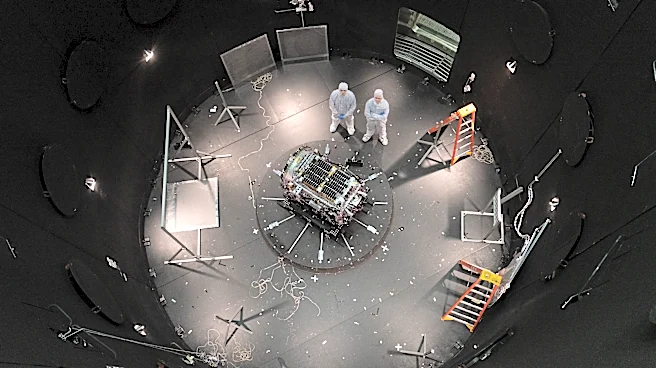
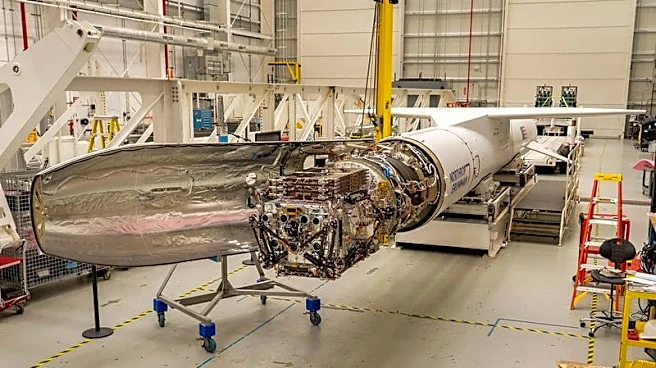
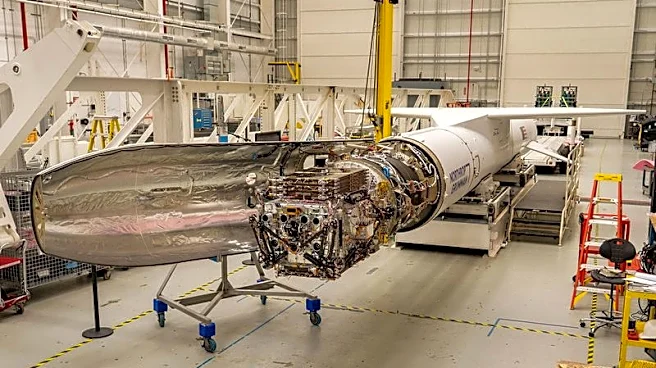
NASA has initiated a rescue mission to save its Swift Observatory, which is at risk of crashing back to Earth due to its decreasing altitude. The mission involves a three-armed spacecraft, launched by Northrop Grumman from the Marshall Islands, which aims
to capture and boost the telescope's orbit. The Swift Observatory, launched in 2004, is currently orbiting 224 miles above Earth but is sinking due to increased atmospheric drag from solar storms. Katalyst Space Technologies, responsible for the mission, plans to raise the telescope's altitude by 150 miles to extend its operational life. The mission was expedited to prevent the telescope from falling beyond recovery by October.
Why It's Important?
This mission is crucial for maintaining the operational capabilities of the Swift Observatory, which plays a significant role in tracking cosmic phenomena such as gamma-ray bursts and exploding stars. The success of this mission could set a precedent for future salvage operations, including potential efforts to save the Hubble Space Telescope, which faces similar altitude challenges. The $30 million investment by NASA underscores the importance of preserving valuable scientific instruments that contribute to our understanding of the universe. The mission also highlights the growing role of private companies like Katalyst Space Technologies in supporting NASA's objectives.
What's Next?
If successful, the Swift Observatory could resume its scientific observations by September. The mission's outcome may influence future decisions regarding the maintenance and extension of other aging space telescopes. Additionally, the collaboration between NASA and private aerospace companies could pave the way for more partnerships aimed at sustaining and enhancing space exploration capabilities.