








What's Happening?
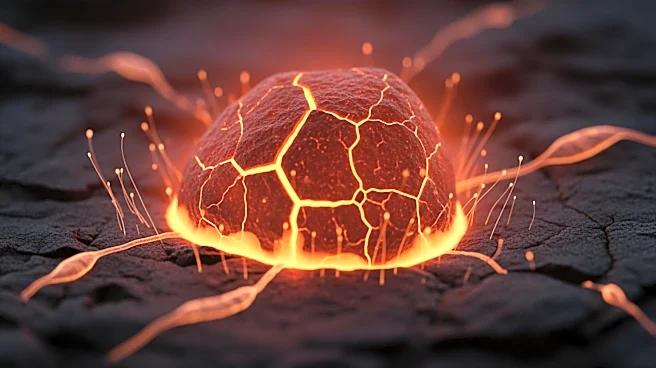
The Chicxulub asteroid, which struck Earth 66 million years ago, created a massive impact site in what is now Mexico. This event is known for causing the extinction of the dinosaurs and a nuclear winter that lasted at least 15 years. Recent studies have
revealed that the impact site remained hot for at least 8 million years, much longer than previously thought. This prolonged heat created a hydrothermal system, a network of hot water-filled pockets within the melted rock, which provided a habitat for microbial life. Researchers drilled into the crater to study rock cores, finding evidence of ongoing hydrothermal activity and microbial life for millions of years after the impact.
Why It's Important?
The findings suggest that impact craters like Chicxulub could have been long-term habitats for early life on Earth. The extended period of heat and the presence of a hydrothermal system would have provided a stable environment for life to develop and evolve. This challenges previous assumptions about the duration of habitable conditions in impact craters and suggests that similar environments could exist on other planets, potentially supporting life. The study highlights the dual role of asteroid impacts in both destroying and creating life-sustaining environments.