










What's Happening?
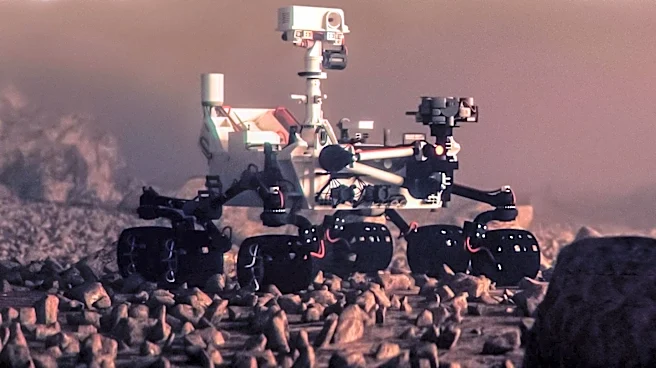
NASA's Perseverance Rover has provided a detailed view of the Broom Point member, a formation within the Jezero Crater on Mars. Captured by the rover's Mastcam-Z instrument, the image reveals a 245-foot-thick stack of ancient rock, estimated to be over 3.9
billion years old. This terrain is among the oldest examined by a Mars rover, with evidence suggesting it was formed by repeated asteroid impacts. The rover's tracks are visible, indicating its descent along the steep crater rim. The Perseverance mission, managed by NASA's Jet Propulsion Laboratory, aims to explore the geological history of Mars and search for signs of past life.
Why It's Important?
The findings from Perseverance's exploration of the Broom Point member provide valuable insights into Mars' geological history and the planet's potential to have supported life. Understanding the formation and composition of ancient Martian rocks can help scientists piece together the planet's past environmental conditions. This knowledge is crucial for future missions and the broader quest to determine whether life ever existed on Mars. The mission also demonstrates the capabilities of modern space exploration technology and the potential for future discoveries on the Red Planet.
What's Next?
As Perseverance continues its mission, it will likely explore additional areas within the Jezero Crater, collecting samples and data to further understand Mars' geological history. These efforts will contribute to NASA's long-term goals of preparing for human exploration of Mars and potentially returning samples to Earth for more detailed analysis. The ongoing success of the Perseverance mission may also influence future Mars missions and international collaboration in space exploration.