



What's Happening?
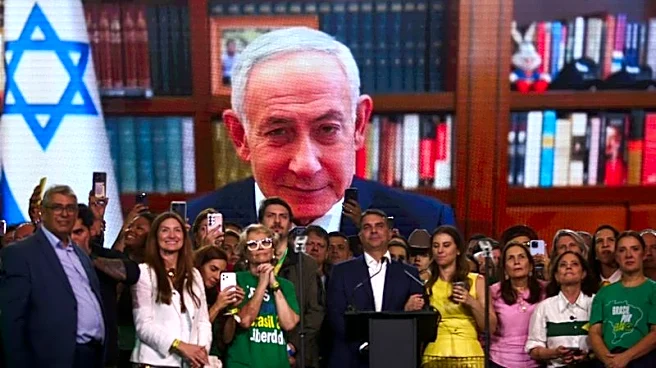
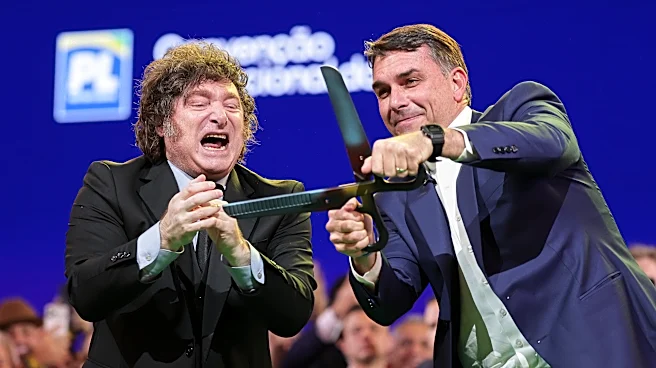
The defense team for Flávio Bolsonaro, a presidential candidate in Brazil, has denied that an AI-generated video featuring his father, Jair Bolsonaro, constitutes a request for votes. The video, shown at a recent PL party convention, depicts Jair Bolsonaro as imprisoned
and silenced, urging support for Flávio. The defense argues that the video did not violate electoral laws as it clearly disclosed the use of AI technology and was not presented as a live or authentic recording. They compared the video to traditional campaign tools like masks and puppets, asserting it does not qualify as a 'deepfake'.
Why It's Important?
This case highlights the intersection of technology and politics, raising questions about the ethical use of AI in electoral campaigns. The defense's argument that the video is akin to traditional campaign tools challenges existing perceptions of AI-generated content. The outcome could influence future regulations on AI use in politics, affecting how candidates communicate with voters. It also underscores the ongoing political dynamics in Brazil, with potential implications for Flávio Bolsonaro's campaign and the broader electoral process.
What's Next?
The Brazilian Supreme Court's decision on this matter could set a legal precedent for the use of AI in political campaigns. If the court rules against Flávio Bolsonaro, it may lead to stricter regulations and oversight of AI-generated content in elections. This could impact future campaign strategies and the role of technology in political communication. The case may also influence public opinion and voter perceptions, potentially affecting the outcome of the upcoming elections.