

What's Happening?
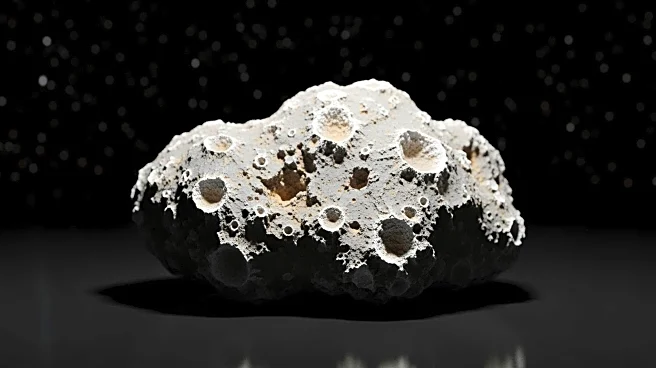
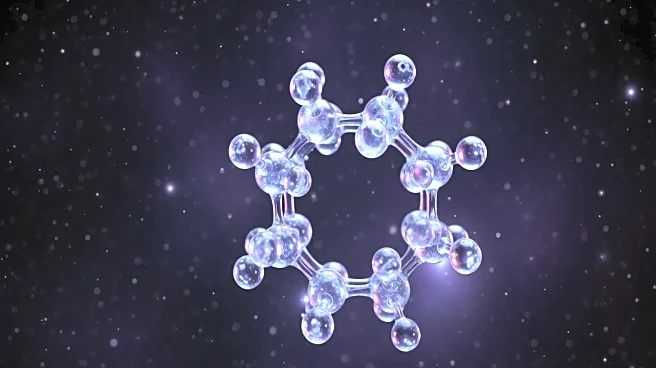
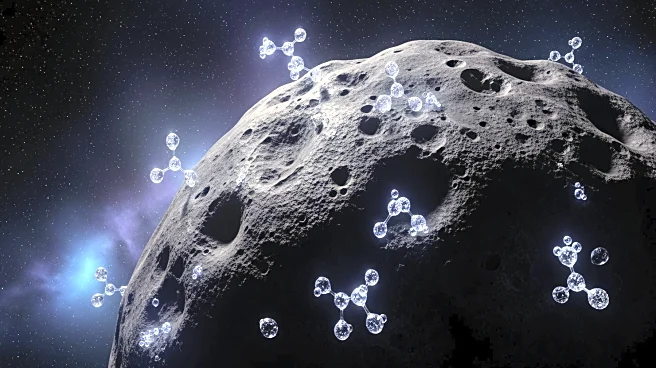
Researchers have discovered all five nucleobases, the building blocks of DNA and RNA, in samples collected from the asteroid Ryugu. This finding, published in Nature Astronomy, indicates that these essential components for life may be common throughout
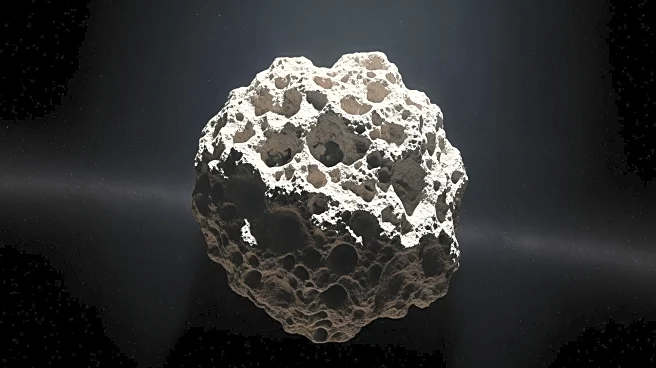
the solar system. The samples were collected by the Japan Aerospace Exploration Agency's Hayabusa2 mission, which returned to Earth in 2020. The presence of these nucleobases on Ryugu supports the hypothesis that primitive asteroids could produce and preserve molecules crucial for the origin of life. This discovery follows similar findings from asteroid Bennu and various meteorites, suggesting that nucleobases might be widespread in space.
Why It's Important?
The detection of DNA and RNA building blocks on an asteroid has significant implications for our understanding of the origins of life. It supports the theory that the essential components for life could have been delivered to Earth via asteroids or comets, rather than forming solely on our planet. This discovery could reshape scientific perspectives on how life began and evolved, potentially influencing future research in astrobiology and planetary science. The widespread presence of nucleobases in the solar system also raises questions about the potential for life elsewhere in the universe, encouraging further exploration and study of other celestial bodies.
What's Next?
Future research will likely focus on analyzing additional samples from asteroids and meteorites to further understand the distribution and formation of prebiotic molecules in space. Scientists may also explore the potential for these findings to inform the search for life on other planets and moons. The ongoing study of asteroids like Ryugu and Bennu could provide more insights into the chemical processes that occur in space and their role in the development of life. Additionally, missions to other asteroids and celestial bodies may be planned to expand our knowledge of the solar system's chemical inventory.