



What's Happening?
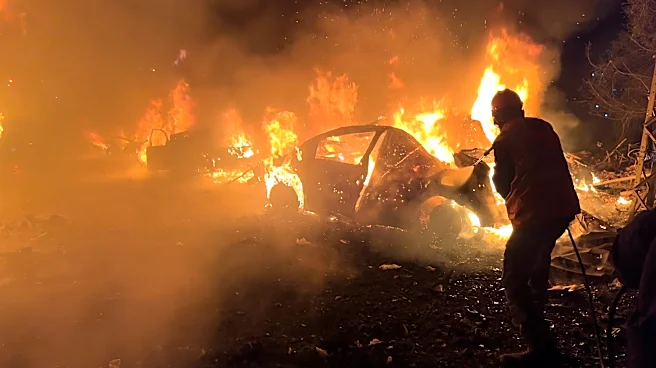
An Israeli airstrike in southern Lebanon on Saturday resulted in the deaths of three journalists covering the ongoing conflict between Israel and Hezbollah. Among the deceased was Ali Shoeib, a correspondent for Hezbollah's Al Manar TV, who had been reporting
from the region for nearly three decades. The Israeli military accused Shoeib of being a Hezbollah intelligence operative, although no evidence was provided to support this claim. Additionally, Fatima Ftouni, a reporter for Al Mayadeen TV, and her brother Mohammed, a video journalist, were also killed in the strike. The Lebanese President, Joseph Aoun, condemned the attack, labeling it a 'flagrant crime' against journalists. The incident has drawn parallels to past Israeli military actions against Palestinian journalists, who were similarly accused of being militants.
Why It's Important?
The deaths of these journalists highlight the ongoing risks faced by media personnel in conflict zones, particularly in the volatile Middle East region. This incident underscores the broader implications for press freedom and the safety of journalists, who are often caught in the crossfire of geopolitical conflicts. The targeting of journalists can have a chilling effect on media coverage, potentially limiting the flow of information from conflict areas. This development also raises questions about the rules of engagement and the protection of non-combatants, including journalists, under international law. The incident may further strain relations between Israel and Lebanon, complicating diplomatic efforts to de-escalate tensions in the region.
What's Next?
The international community, including organizations dedicated to press freedom, may call for investigations into the circumstances surrounding the airstrike and the deaths of the journalists. There could be increased pressure on Israel to provide evidence supporting its claims against the journalists and to ensure accountability for actions that result in civilian casualties. The Lebanese government may seek to rally international support to condemn the attack and to push for stronger protections for journalists operating in conflict zones. Additionally, media organizations may reassess their safety protocols for journalists covering conflicts in the Middle East.
Beyond the Headlines
This incident may prompt a broader discussion about the ethical responsibilities of military forces in conflict zones, particularly regarding the treatment of journalists. It also highlights the challenges faced by media outlets in maintaining unbiased reporting while operating in areas controlled by militant groups. The deaths of these journalists could lead to increased advocacy for stronger international protections for journalists and more robust mechanisms to hold accountable those who violate these protections. The situation may also influence public opinion and policy decisions related to media freedom and the role of journalism in conflict resolution.