







What's Happening?
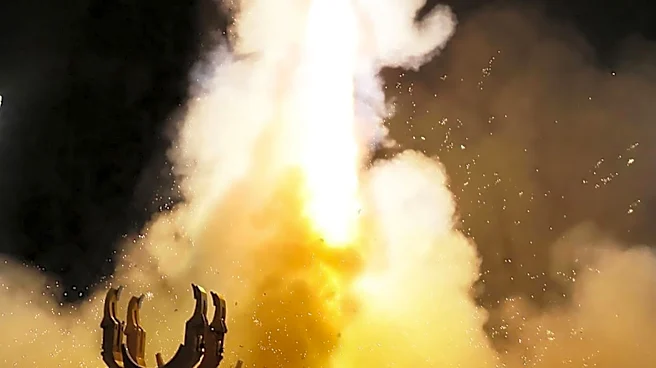
North Korea fired approximately a dozen short-range ballistic missiles into the sea on Thursday, according to South Korea’s military. The launches originated from the eastern coastal area of Wonsan around 12:30 PM local time, with the missiles traveling
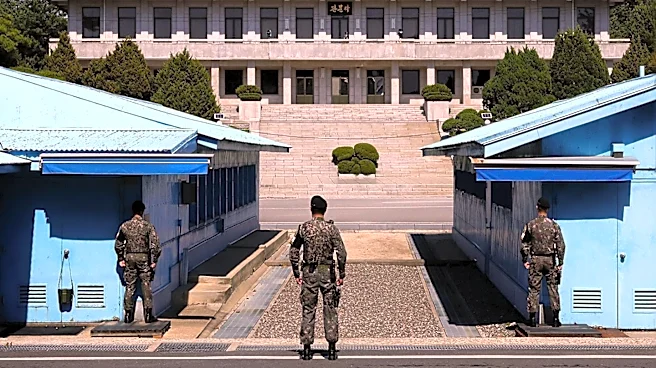
about 250 kilometers. This event occurred a day after Seoul reiterated its call for military talks aimed at preventing accidental clashes along the heavily fortified border between the two nations. South Korea has since increased its surveillance for additional launches and is sharing intelligence with the United States and Japan. Seoul's proposal for military talks, initially made on October 23, sought to jointly verify the Military Demarcation Line, restore military communication channels, and establish measures to avoid unintended confrontations. Unification Minister Chung Dong-young emphasized the need for dialogue to align positions on the MDL and restore communication for peaceful management of the area. North Korea has not yet responded to these overtures for talks.
Why It's Important?
The recent ballistic missile launches by North Korea, coupled with its silence on South Korea's calls for dialogue, significantly heighten tensions on the Korean Peninsula. This escalation poses a direct challenge to regional stability and could have broader implications for U.S. security interests in East Asia, given the U.S.'s alliance with South Korea and Japan. The lack of direct military communication between the two Koreas, despite a separate channel maintained by the UN Command, increases the risk of miscalculation and accidental conflict. Such incidents could disrupt international trade routes, impact global financial markets due to geopolitical uncertainty, and potentially draw the U.S. into a regional crisis. The ongoing dispute over the Military Demarcation Line and recent landmine incidents further underscore the fragility of peace in the region, making diplomatic engagement crucial to de-escalate tensions and prevent a wider conflict.
What's Next?
South Korea is expected to continue its efforts to engage North Korea in military talks, emphasizing the need for communication to prevent accidental clashes. The U.S., in conjunction with Japan, will likely maintain heightened surveillance and intelligence sharing with South Korea to monitor North Korean military activities. The international community will be closely watching for any response from Pyongyang to Seoul's dialogue proposals. Further missile tests or provocative actions from North Korea could lead to increased sanctions or stronger condemnations from the United Nations and other international bodies. The focus will remain on diplomatic efforts to de-escalate the situation and establish reliable communication channels to manage border disputes and reduce the risk of military confrontation.
Beyond the Headlines
The recurring cycle of North Korean missile tests and South Korean calls for dialogue highlights a deeper, long-standing geopolitical stalemate. The deterioration and disappearance of many of the original markers along the Military Demarcation Line, as noted by Yonhap, symbolize the erosion of the 1953 armistice's foundational agreements. This physical ambiguity on the ground mirrors the diplomatic impasse, where differing interpretations of boundaries and responsibilities fuel mistrust. The ethical dimension of these tensions lies in the constant threat of conflict to civilian populations on both sides of the border. Legally, the continued violation of international resolutions by North Korea through its missile tests challenges the efficacy of global non-proliferation efforts. Culturally, the division continues to impact the identity and aspirations of the Korean people, perpetuating a state of unresolved conflict that has profound human consequences.