






What's Happening?
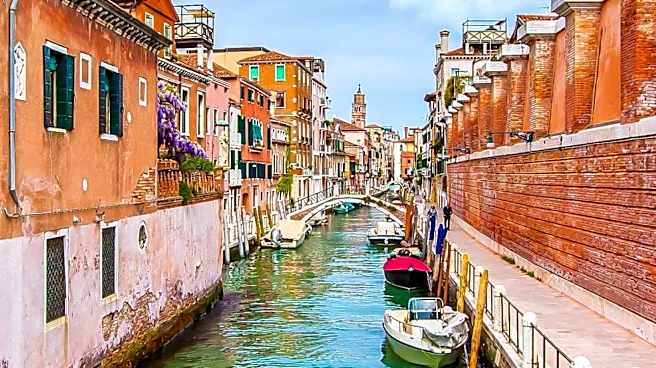
Meduseo, an interactive platform, offers a jellyfish map specifically for Venice Lido Beach in Venice, Italy. This service allows beachgoers to check for recent jellyfish sightings and understand the density evolution of jellyfish in the area. Users can
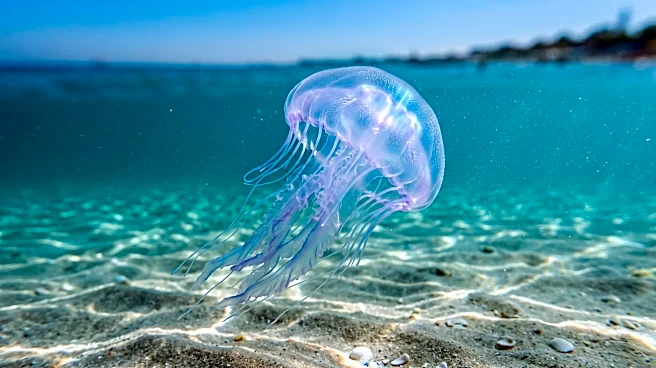
report jellyfish sightings, providing details such as the date, beach location, comments, GPS coordinates, jellyfish size, color, and water temperature. The platform also allows for the identification of specific jellyfish species, including Pelagia Noctiluca, Aurelia Aurita, Rhizostoma octopus, Cotylorhiza tuberculata, Chrysaora hysoscella, Velella Velella, and Carybdea marsupialis. Users can create free accounts to track their reports, add favorite locations, and access exclusive features, contributing to a community-driven database of jellyfish activity.
Why It's Important?
This jellyfish map is a valuable tool for public safety and beach enjoyment at Venice Lido. For tourists and local residents, knowing the presence and density of jellyfish can help them make informed decisions about swimming and other water activities, potentially preventing stings and ensuring a more pleasant beach experience. From an environmental perspective, the collected data can contribute to a better understanding of jellyfish populations and their movements, which can be influenced by factors like water temperature and currents. This information could be useful for marine biologists and environmental researchers studying marine ecosystems and the impact of climate change on marine life. The community-driven reporting also fosters public engagement in environmental monitoring.
What's Next?
The Meduseo platform will likely continue to rely on user-generated reports to maintain and update its jellyfish map for Venice Lido. As more users contribute data, the accuracy and comprehensiveness of the map are expected to improve. Future developments might include enhanced prediction models for jellyfish presence based on environmental factors, or integration with other marine data sources. Beach authorities and local tourism boards could potentially utilize this data to issue advisories or implement preventative measures, further enhancing beach safety. The platform's expansion to other coastal areas could also provide a broader understanding of jellyfish distribution globally.
Beyond the Headlines
The Meduseo jellyfish map highlights the growing trend of citizen science, where public participation in data collection contributes to scientific research and public services. This initiative empowers individuals to play an active role in monitoring their local environment. Beyond immediate safety concerns, the long-term data collected through such platforms can offer crucial insights into ecological changes, such as shifts in marine biodiversity or the effects of ocean warming on jellyfish blooms. These blooms can have significant ecological and economic impacts, affecting fisheries, tourism, and marine ecosystems. Therefore, tools like Meduseo serve as early warning systems and valuable data repositories for understanding and mitigating these broader environmental challenges.