




What's Happening?
Ukraine is testing a new aerial drone named 'StarGate' for battlefield medical evacuations. Developed by Ukrainian defense tech company SkyFall, the drone aims to transport wounded soldiers from dangerous 'kill zones' to safety without requiring an evacuation crew.
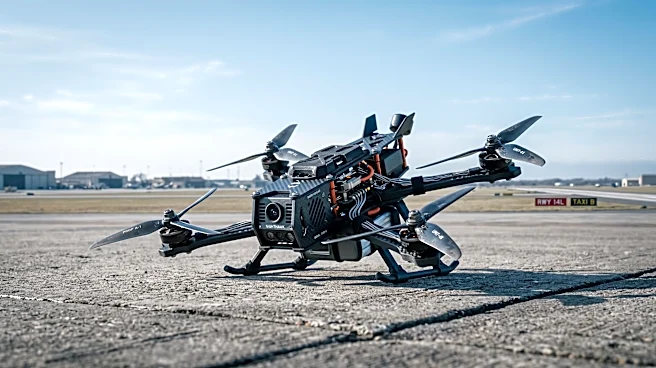
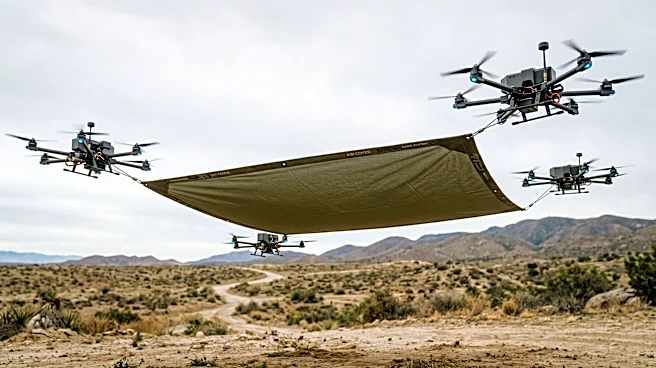
The Associated Press was granted exclusive access to a field demonstration of StarGate, which has since been handed over to a combat brigade for front-line evaluation. The drone, equipped with six propellers, can carry a payload of up to 150 kilograms (330 pounds), sufficient for a wounded soldier in body armor and combat equipment. It has a one-way range of 15 kilometers, cruises at 65 kph (40 mph), and can reach speeds of up to 105 kph (65 mph). StarGate is designed to operate in GPS-denied environments and maintain control even when communications are disrupted, utilizing Starlink, SkyFall’s proprietary L-Link system, and an AI-based system.
Why It's Important?
The StarGate drone represents a potentially transformative development in battlefield medical evacuations, addressing a critical challenge faced by military forces in modern conflicts. Traditional ground evacuations are often slow, dangerous, and sometimes impossible due to terrain, enemy fire, and drone threats. This aerial solution could significantly reduce the time it takes to reach critically wounded soldiers, potentially saving lives that would otherwise be lost due to prolonged waiting periods. By removing human evacuation crews from direct danger, StarGate also reduces personnel exposure to combat risks. The drone's ability to operate in GPS-denied and electronically jammed environments highlights its resilience against sophisticated modern warfare tactics. If proven reliable in combat, this technology could set a new standard for casualty extraction, influencing military doctrine and procurement worldwide, particularly in nations facing similar operational challenges.
What's Next?
StarGate is currently undergoing front-line evaluation with a combat brigade, a crucial phase to assess its reliability and effectiveness under real combat conditions. The unit requires at least a month of experience to provide meaningful statistics on its success rate. SkyFall aims to produce up to 1,000 StarGate systems per month by the end of 2026, with each system estimated to cost at least $50,000, depending on configuration. If successful, the drone could be widely adopted by Ukrainian forces, leading to a significant improvement in their medical evacuation capabilities. Other nations and defense companies will likely monitor StarGate's performance closely, potentially inspiring similar developments in aerial medical evacuation technology globally. Further advancements may include increased range, payload capacity, and enhanced autonomous navigation features to adapt to evolving battlefield conditions.
Beyond the Headlines
The development of drones like StarGate underscores a broader trend in modern warfare: the increasing reliance on unmanned systems to perform tasks traditionally carried out by humans, especially those involving high risk. This shift has profound implications for military logistics, personnel safety, and the ethical considerations of combat. While StarGate offers clear advantages in saving lives and reducing risk, it also highlights the growing complexity of the battlefield, where electronic warfare and drone-on-drone engagements are becoming commonplace. The integration of AI for navigation and control in contested environments points to a future where autonomous systems are not just tools but integral components of military operations. This innovation could also spur the development of specialized counter-drone measures designed to intercept medical evacuation drones, raising new ethical dilemmas about targeting non-combat support systems in warfare. The long-term impact could include a re-evaluation of the role of human medics on the front lines and the development of entirely new protocols for casualty care in combat zones.