




What's Happening?
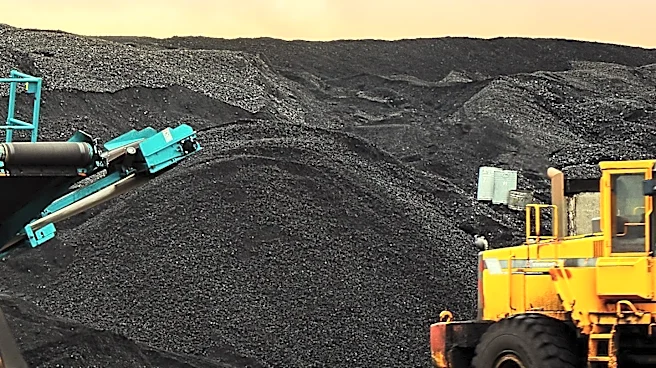
A new study indicates that porous wind fences installed near Newport News coal terminals could significantly decrease air pollution for residents in the Southeast Community. The study, privately funded and conducted by Dust Solutions Inc., evaluated various
fence heights and layouts, concluding that an optimal configuration of 80-foot tall wind fences could reduce dust movement by nearly 90%. This reduction would occur by blocking wind that carries dust from stockpiles and intercepting airborne particles. Residents of Newport News' Southeast Community have voiced concerns for decades regarding health problems attributed to pollution from the two largest coal terminals in the country, operated by Kinder Morgan and Dominion Terminal Associates since the 1880s. Despite the study's findings on mitigation opportunities, it did not assess air quality in the Southeast Community or confirm any environmental violations. City Manager Alan Archer stated that the study serves as a tool for the city to consider next steps in addressing community concerns, emphasizing the city's commitment to evaluating options for relief.
Why It's Important?
This study is important because it offers a potential solution to a long-standing environmental and public health issue in Newport News. The Southeast Community has experienced generations of health problems, with a 2005 Peninsula Health District study finding asthma rates in the area to be more than double the state average. While previous studies have avoided directly linking coal terminals to health complications, the consistent complaints from residents highlight the urgent need for effective pollution control. The proposed wind fences could significantly improve air quality, potentially alleviating health concerns and enhancing the quality of life for thousands of residents. The involvement of major operators like Kinder Morgan and Dominion Terminal Associates underscores the industrial scale of the issue and the potential for large-scale environmental improvements. The city's consideration of these findings demonstrates a commitment to addressing environmental justice concerns and responding to community advocacy, setting a precedent for how industrial cities might tackle similar challenges.
What's Next?
Despite the promising findings, Newport News currently has no definitive plans to construct wind fences. Building a system similar to the one deemed effective in the study could cost between $10 million and $20 million. Before any construction, the city would need to conduct further feasibility studies and design work. City Manager Alan Archer and Mayor Phillip Jones have both expressed commitment to exploring options and working with federal and state partners to secure necessary resources. The state Department of Environmental Quality is also nearing the launch of a long-delayed study that will directly evaluate the impacts of coal terminals on nearby communities in both Norfolk and Newport News. This upcoming study, along with additional testing and field monitoring recommended by Dust Solutions Inc., will be crucial in verifying the current findings and guiding future actions. The city will continue to seek feasible ways to improve conditions for residents, with potential reactions from the coal terminal operators, Kinder Morgan and Dominion Terminal Associates, yet to be seen.
Beyond the Headlines
The issue of coal dust pollution in Newport News extends beyond immediate environmental concerns, touching upon broader themes of environmental justice and corporate responsibility. The decades-long complaints from the Southeast Community highlight a persistent challenge where industrial operations disproportionately affect marginalized communities. The cost of implementing wind fences, estimated at $10 million to $20 million, raises questions about funding mechanisms and whether the burden should fall on taxpayers, the city, or the corporations operating the terminals. The lack of immediate plans for construction, despite a clear potential solution, underscores the complex interplay between economic interests, public health, and political will. This situation could set a precedent for how cities address historical industrial pollution and the role of private studies in informing public policy. The ongoing state study will be critical in providing a comprehensive understanding of the health impacts, potentially leading to stronger regulatory actions or mandates for pollution control, thereby influencing environmental policy and corporate accountability across similar industrial zones in the U.S.