



What's Happening?
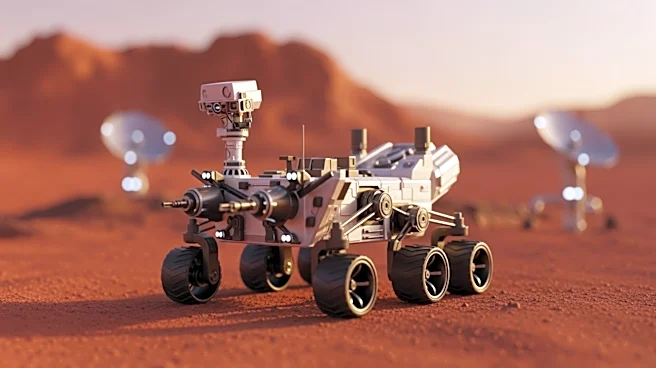
NASA has approved the implementation phase for the Rosalind Franklin Support and Augmentation (ROSA) project, which is part of the European Space Agency's (ESA) Rosalind Franklin mission to Mars. This mission, scheduled for launch in 2028, aims to search
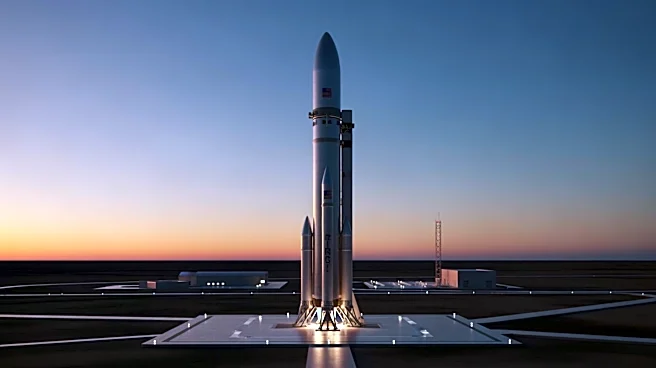
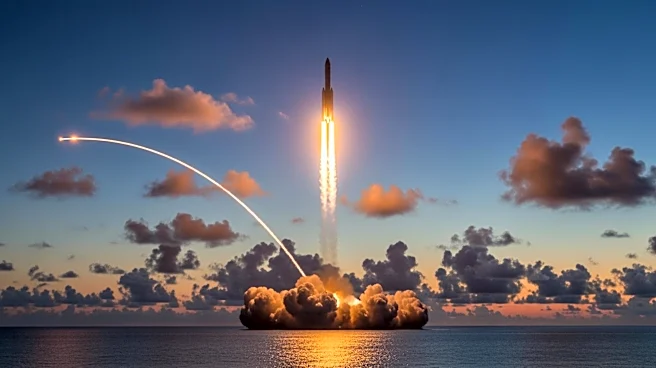
for signs of past or present life beneath the Martian surface. NASA's role includes providing essential hardware and services such as the launch service, braking engines for the rover's lander platform, and radioisotope heater units for the rover's internal systems. Additionally, NASA will supply specialized electronics and a mass spectrometer for the Mars organic molecule analyzer, which will investigate potential life-building blocks in samples from Mars' Oxia Planum. The mission will be launched using SpaceX's Falcon Heavy rocket from NASA's Kennedy Space Center in Florida.
Why It's Important?
The collaboration between NASA and ESA on the Rosalind Franklin mission represents a significant international effort in space exploration, particularly in the search for extraterrestrial life. By providing critical support and technology, NASA is enhancing the mission's capabilities to explore Mars' subsurface, which could yield groundbreaking discoveries about the planet's habitability. This mission also strengthens the partnership between the U.S. and European space agencies, potentially paving the way for future collaborative projects. The use of SpaceX's Falcon Heavy rocket underscores the growing role of private companies in space exploration, highlighting a shift towards more cost-effective and innovative solutions in the industry.
What's Next?
The mission is set to launch no earlier than late 2028, with NASA's Launch Services Program managing the launch service. As the project progresses, further developments in the design and testing of the rover and its instruments will be crucial. The success of this mission could influence future Mars exploration strategies and international collaborations. Stakeholders, including scientific communities and space agencies, will be closely monitoring the mission's progress and outcomes, which could impact funding and support for subsequent missions.